乐高搭建合集(卷一·建筑师续章)— 现代主义与粗野主义
本篇为卷一《建筑师》的续章,重点介绍现代主义(Modernism)和粗野主义(Brutalism)建筑风格及其在乐高搭建中的应用。
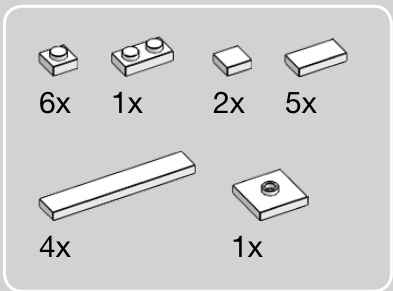
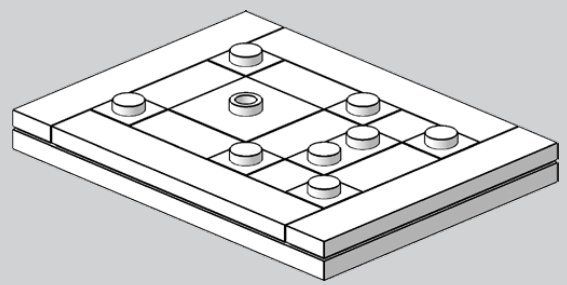
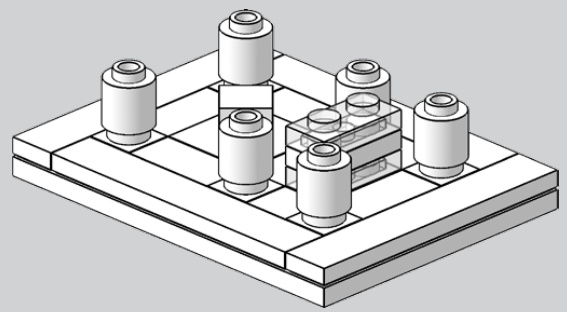
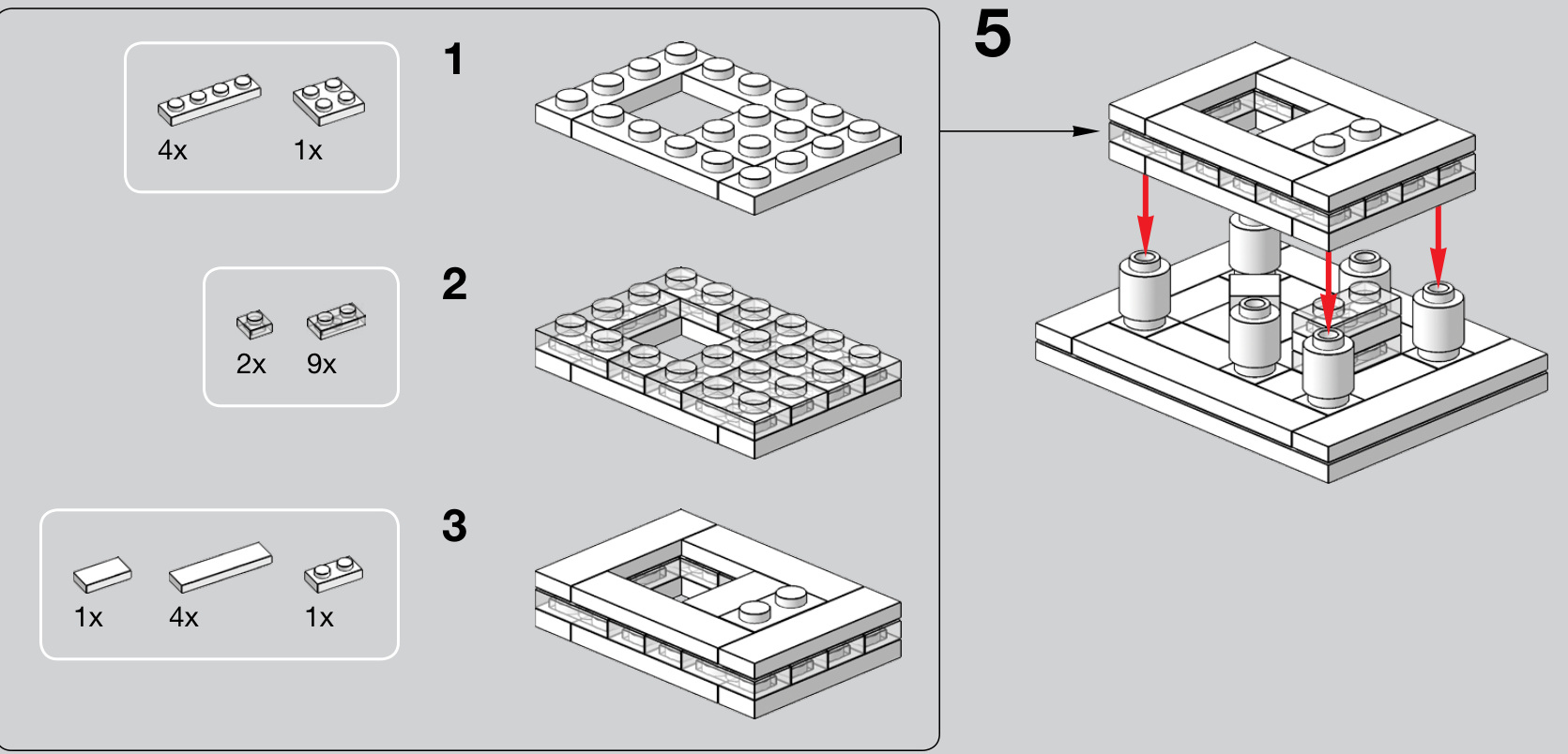
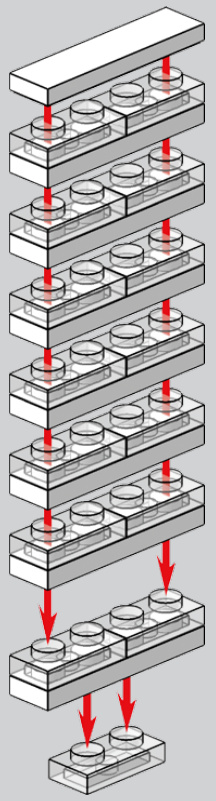
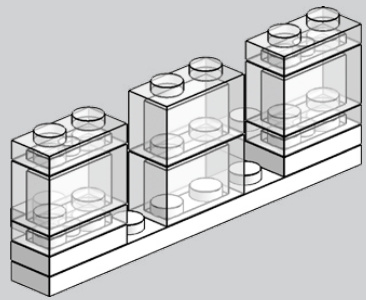
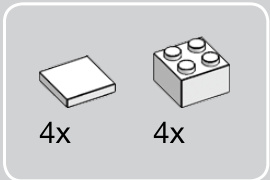
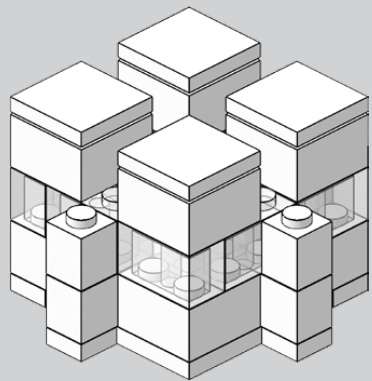
Clear plates might represent an entire floor in a microscale skyscraper.
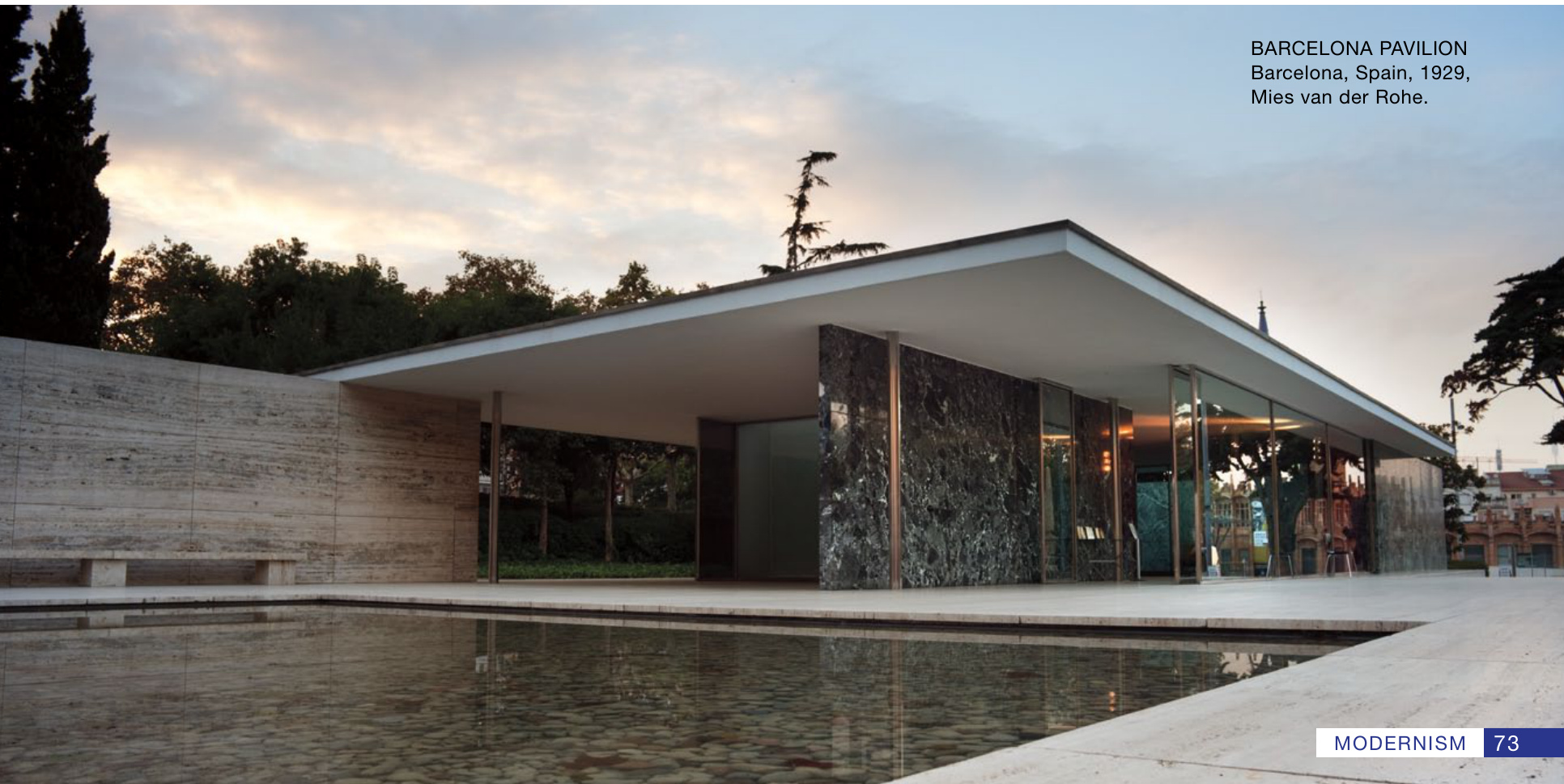
prefabricated industrial materials. Despite these efforts, Modernist homes weren’t appealing to many families.
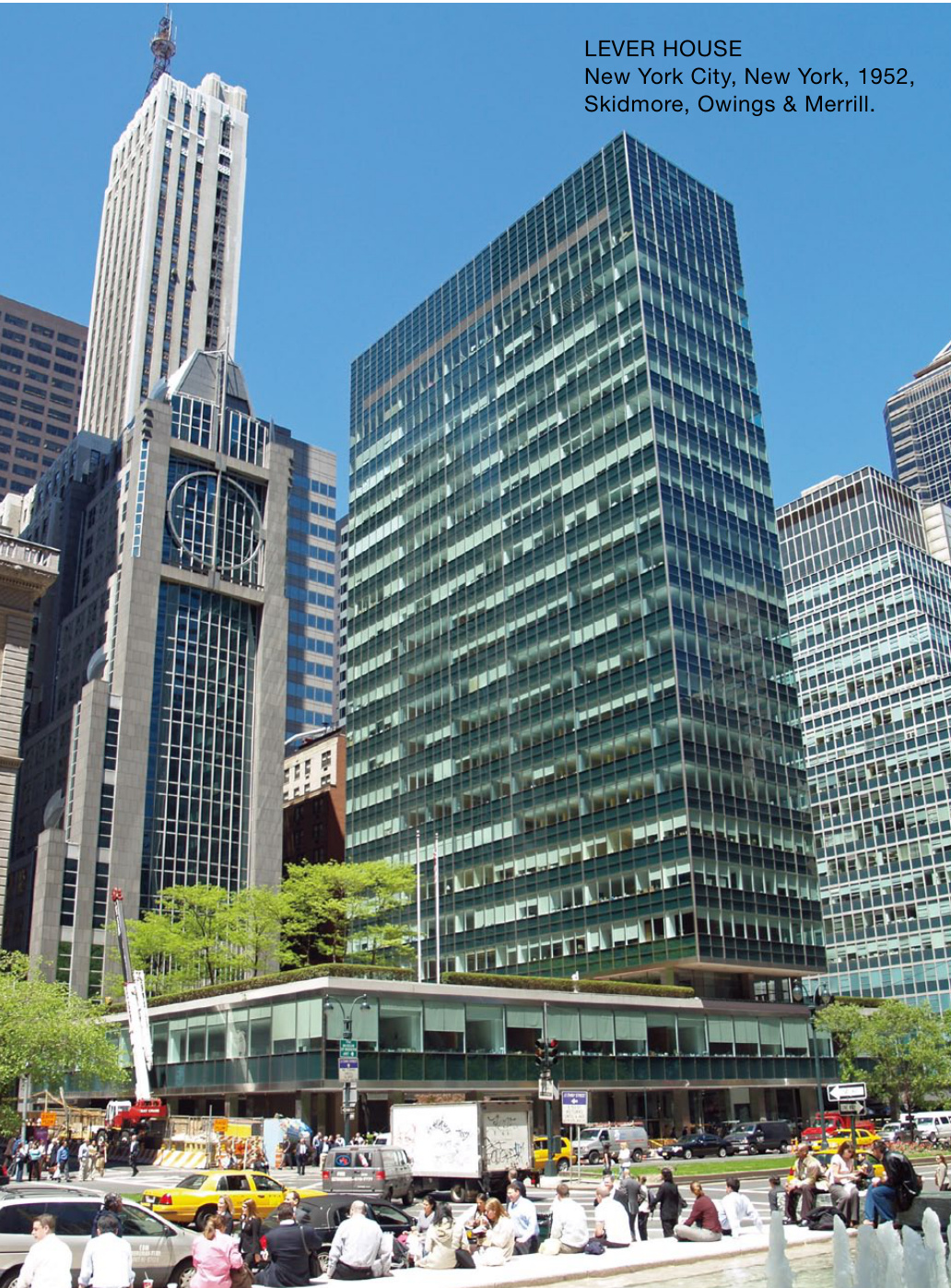
In contrast, office buildings like Lever House (1952) showed that you could build attractive cubic skyscrapers if you clad them in glass. Modernist architecture became the dominate corporate style for the next 35 years as businesses learned that buildings with large open floor plans were more profitable to rent and cheaper to construct than more decorated styles.
The basic rectangular skyscraper was copied all over the world with varying results.
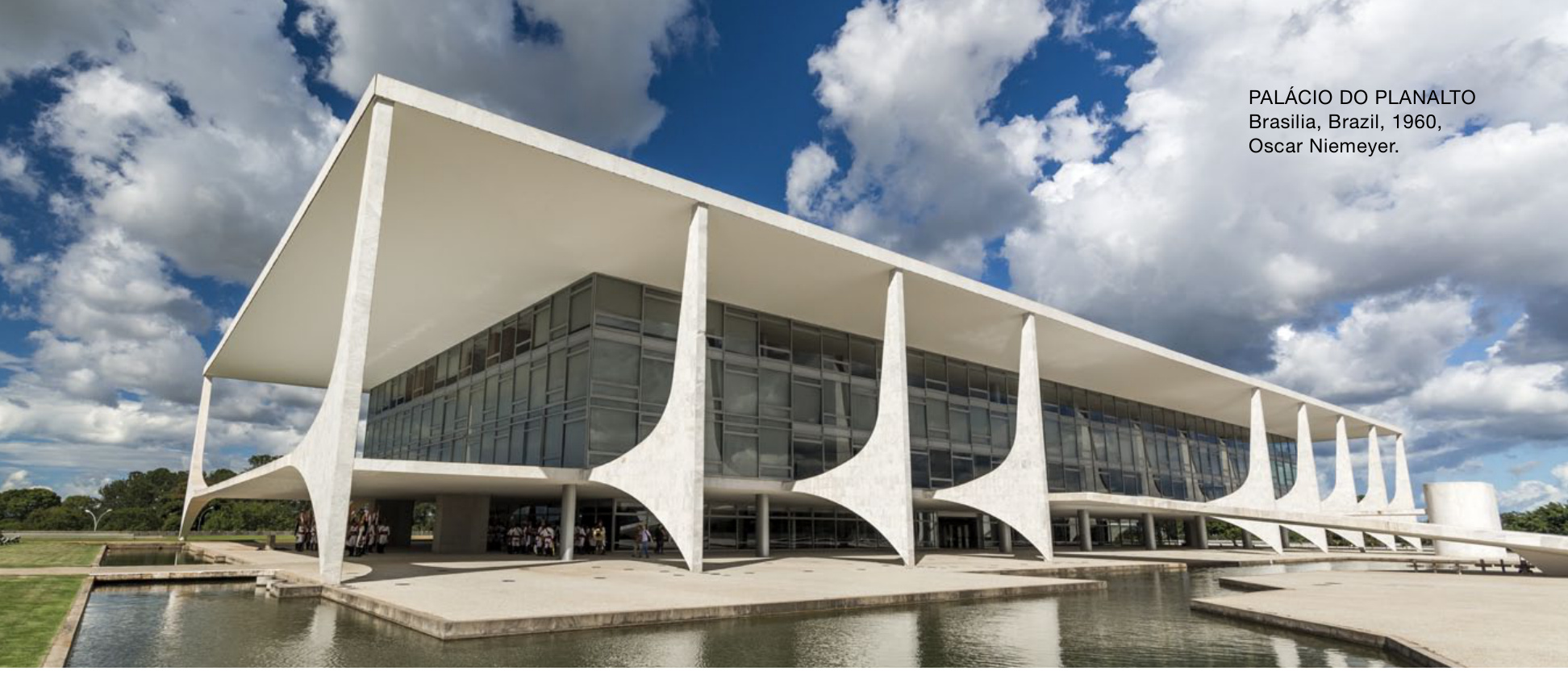
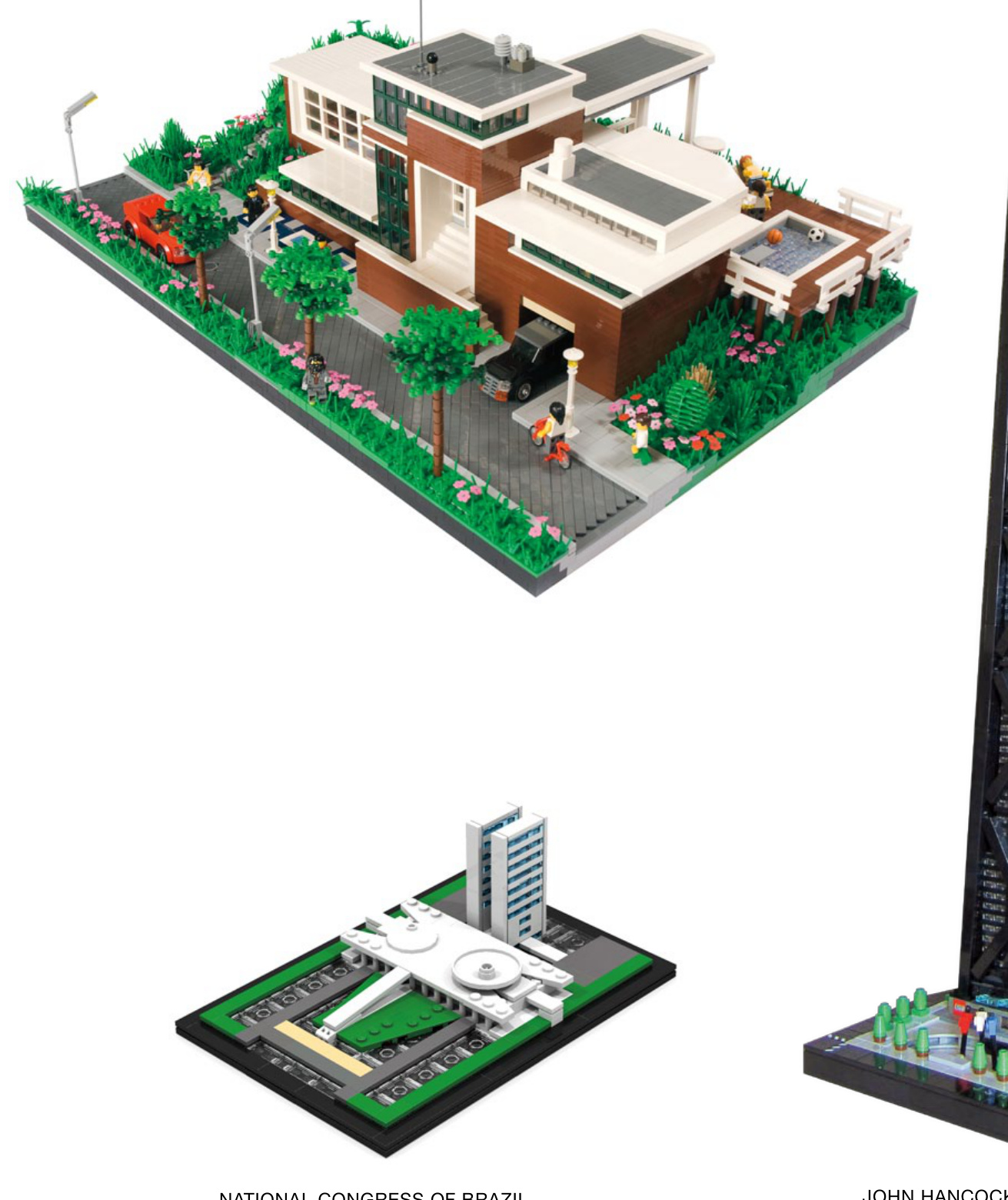
By the late 1960s, architects started looking for ways to inject some of their own style while preserving the efficiency of Modernist designs. The stair-stepped Sears Tower (1973), now called Willis Tower, added visual interest by staggering the building’s height as it rises. Oscar Niemeyer added sculptural shapes to Modernist buildings, as in the curved shapes he used instead of basic columns for Palácio do Planalto (1960). By the 1980s, new buildings had become more and more decorated, ushering in the Postmodern era.
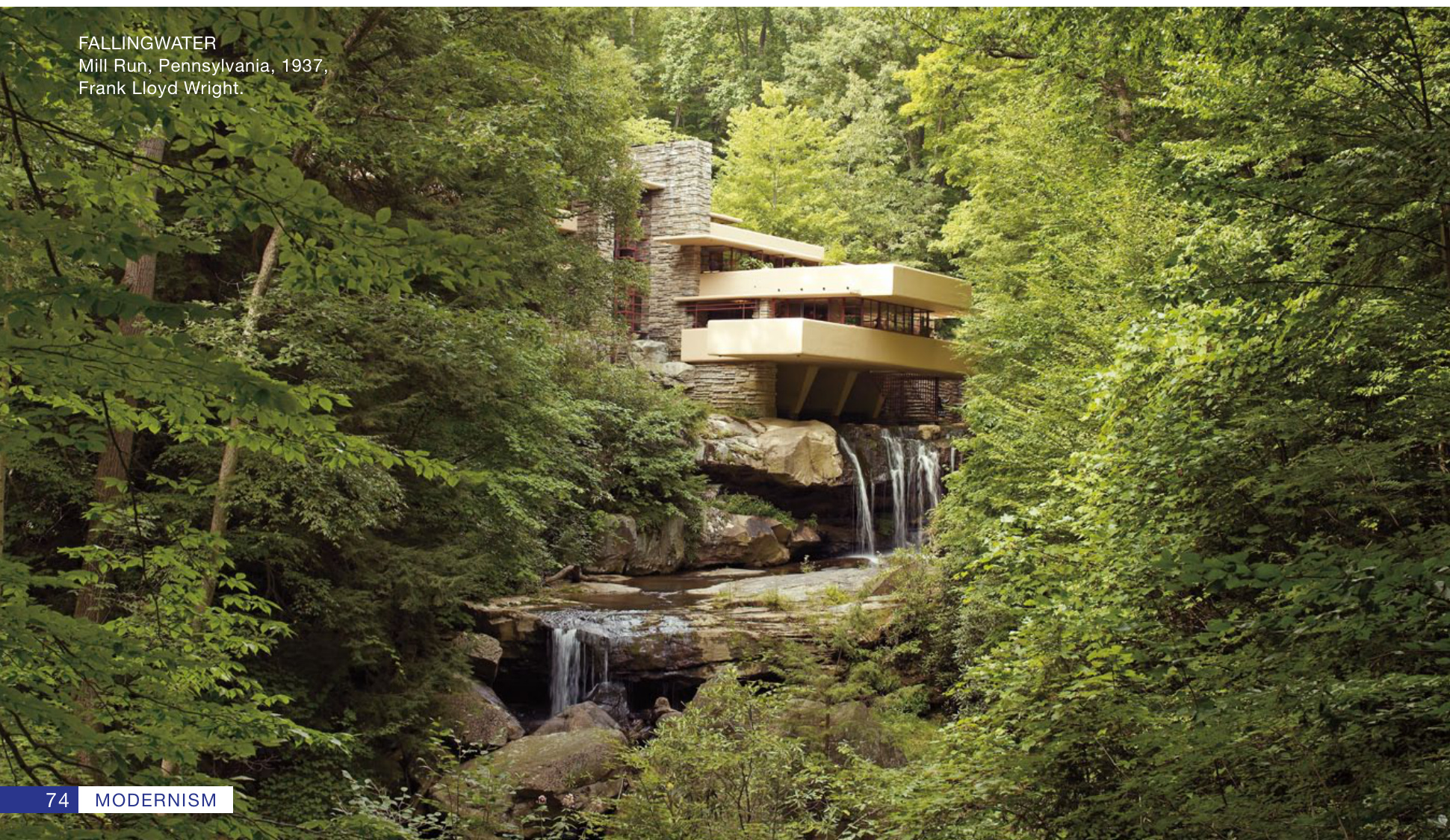
Modernism in LEGO
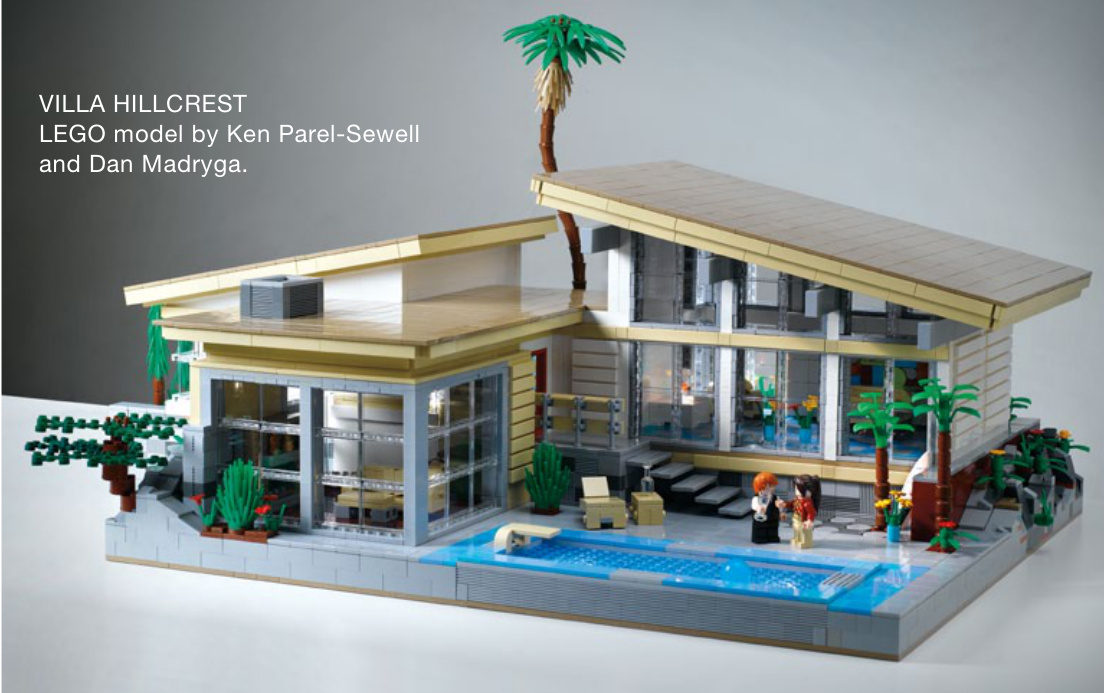
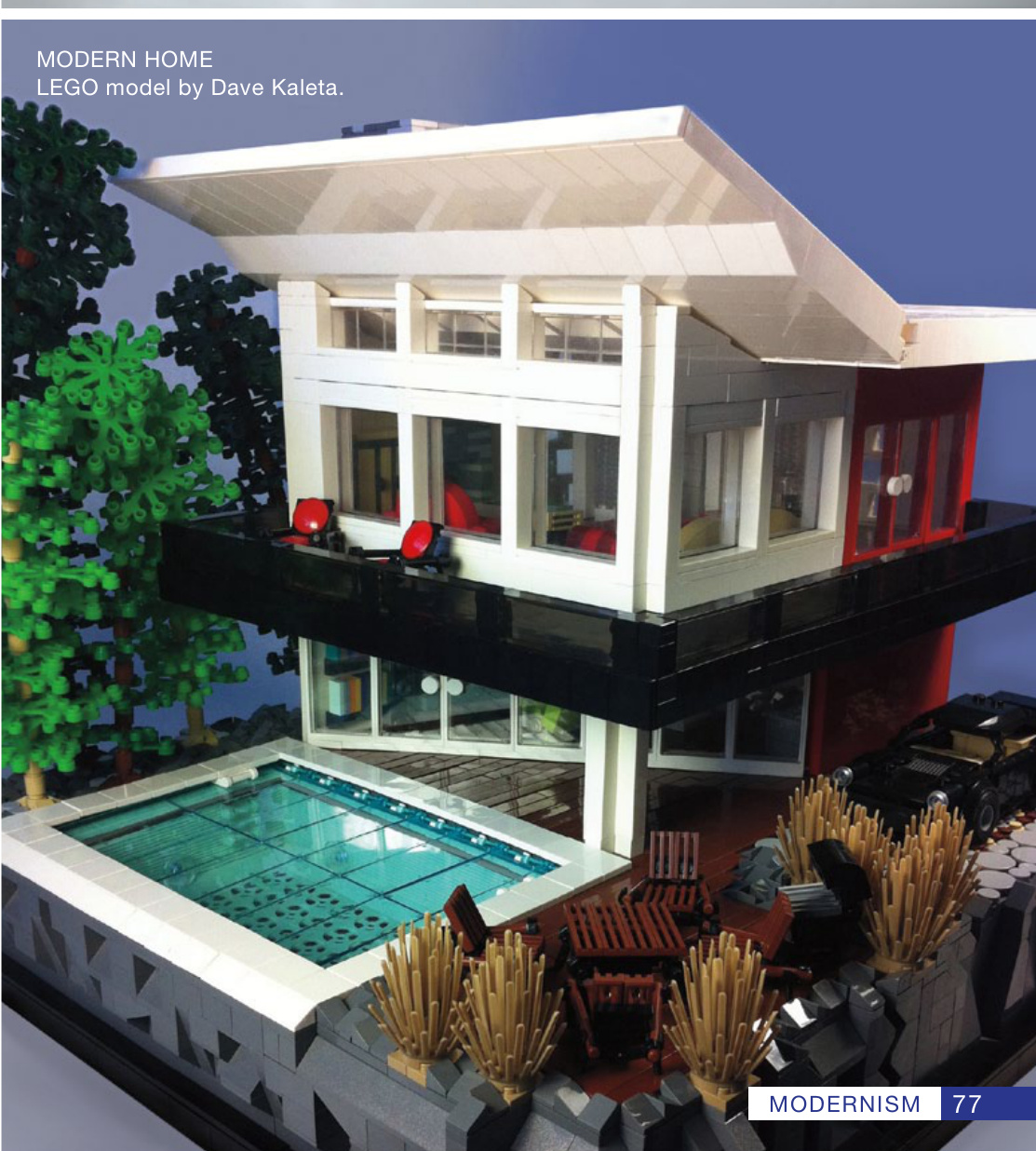
Modernism is a natural fit for LEGO as the style rarely deviates from blocky, cubic forms, especially those buildings in the early International Style. That said, building large sections of glass can be difficult because there is a limited number of clear LEGO parts.
Because of Modernism’s lack of ornamentation, you might find it challenging to build interesting models. Focusing on the principle of emphasizing volume over mass can be helpful: try making interesting shapes using only basic LEGO bricks to represent whole rooms or floors. Once you have a basic form that you like, you can re-create it with windows, pilotis, and other details. If it doesn’t look quite right, change the proportions by making the model taller or wider, or incorporate a simple repeated element such as horizontal or vertical bands of a different color.
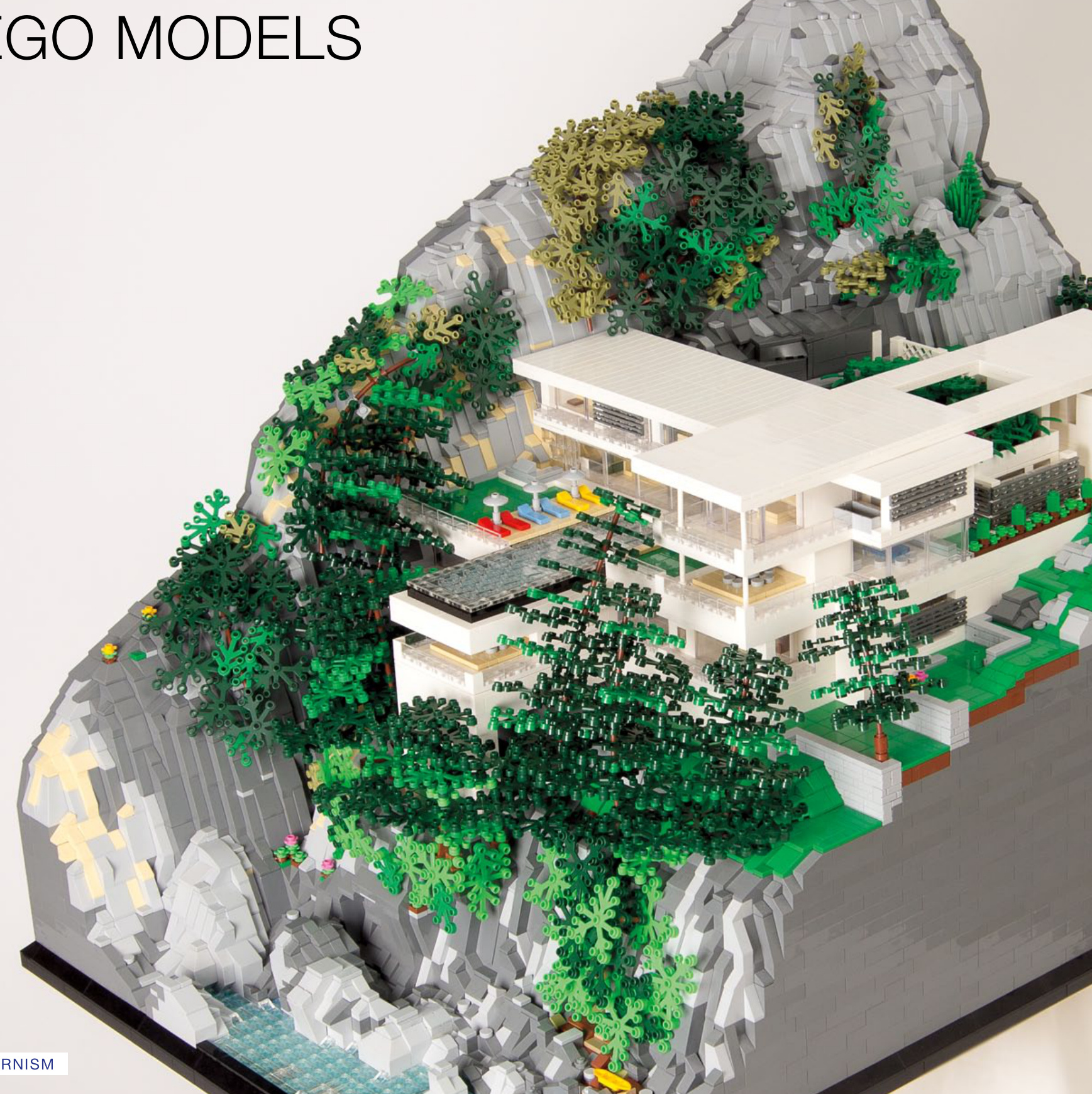
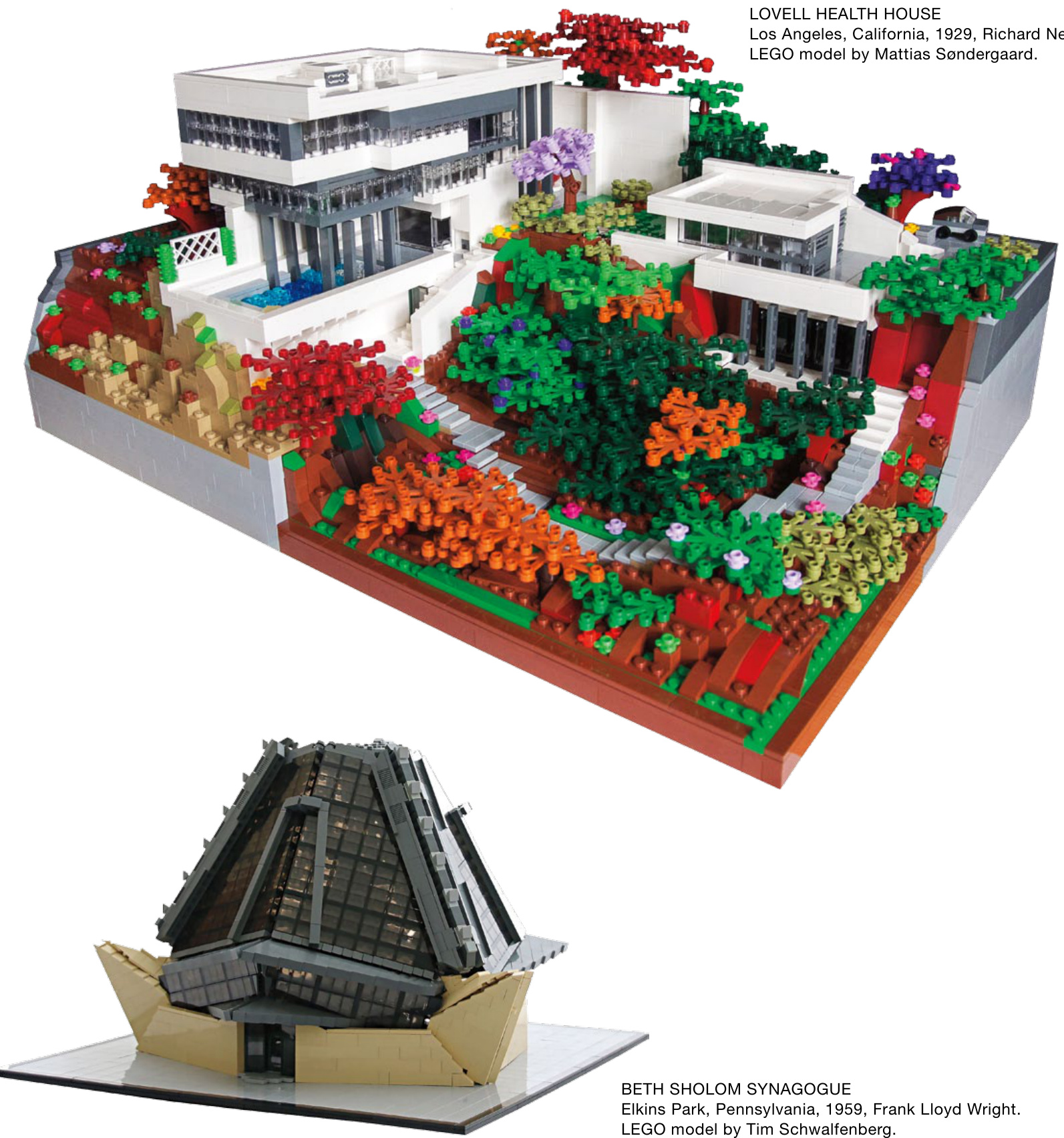
You can also try placing your model in a landscape. A model with simple lines and colors can be really striking when placed on a hill or surrounded with greenery.
LEGO Colors
White

Light bluish grey
Black
Trans light blue
Trans clear
ModernisT
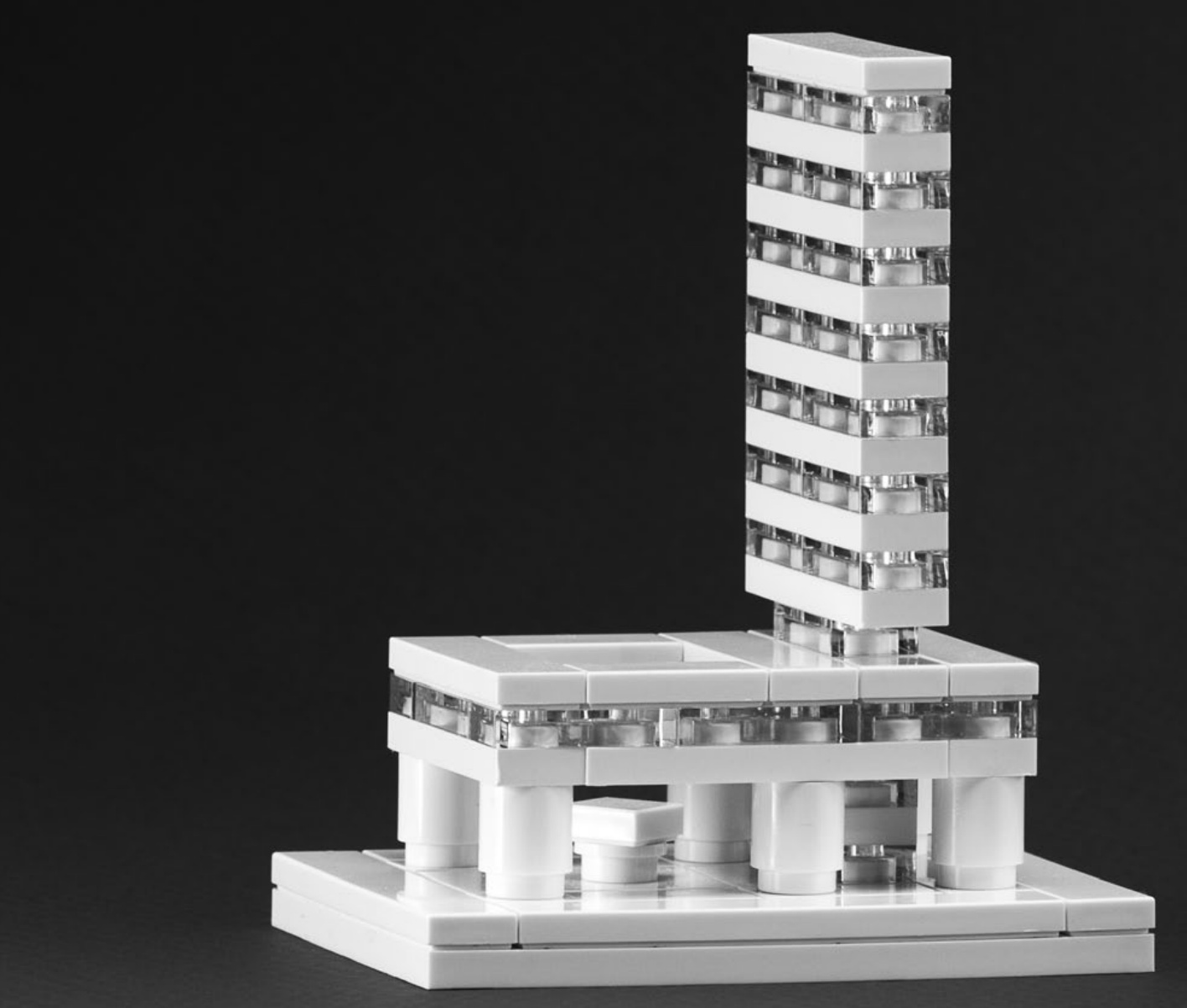
Lever House
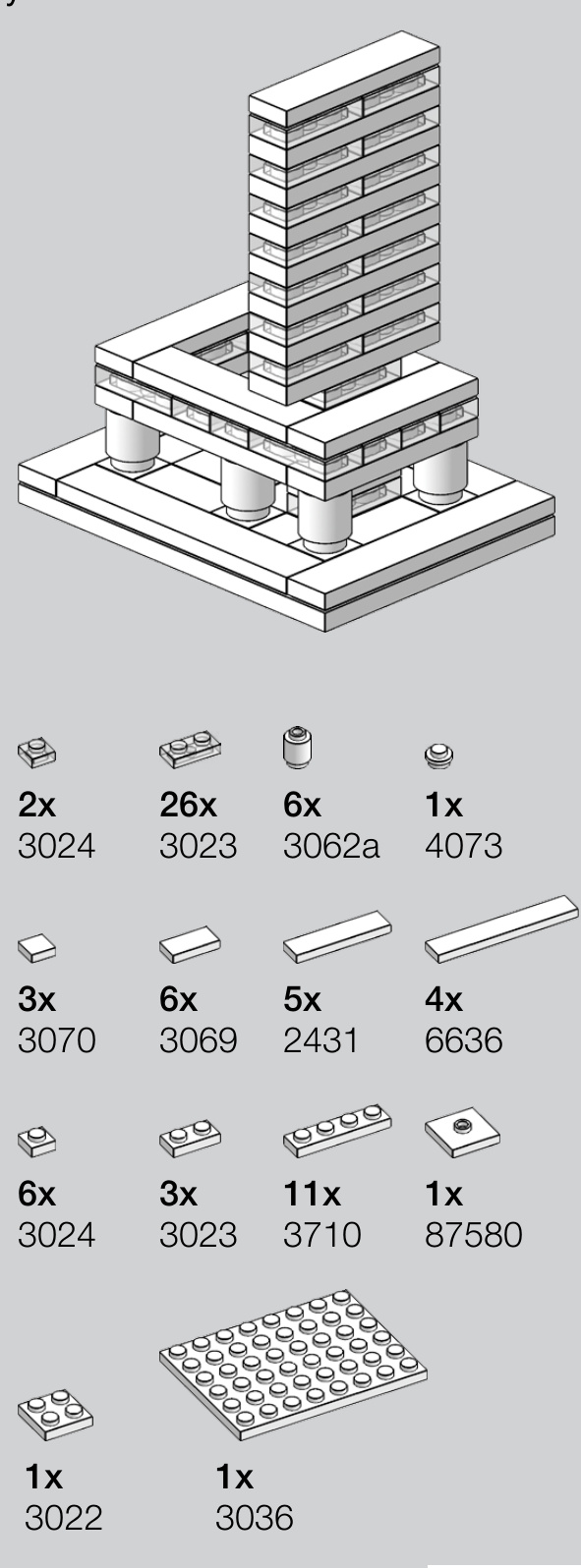
Lever House is an International Style office tower in New York City. It is one of the earliest office buildings in this style and has been designated as a landmark. It features a broad second story that surrounds a public courtyard, and a single slender tower.
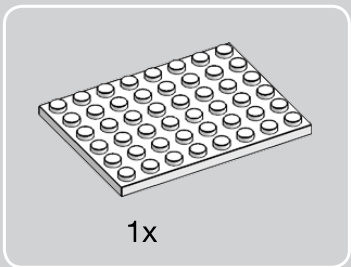
1
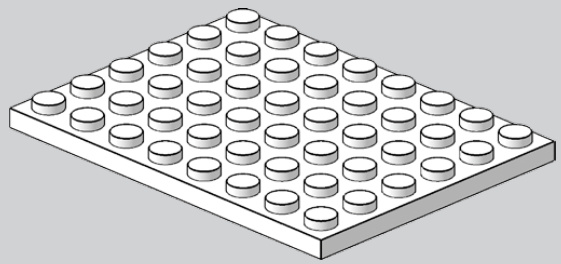
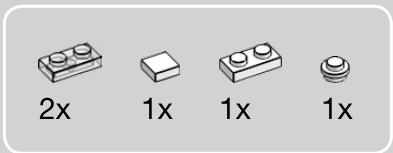
3
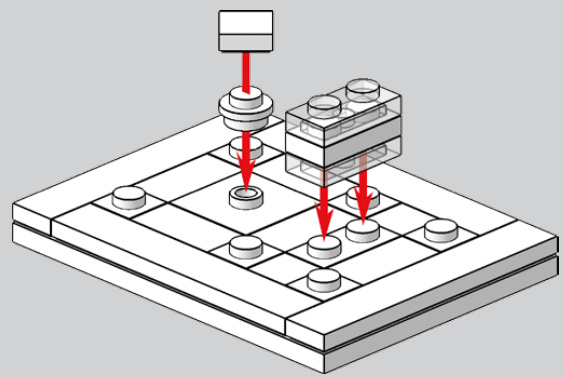
2

6

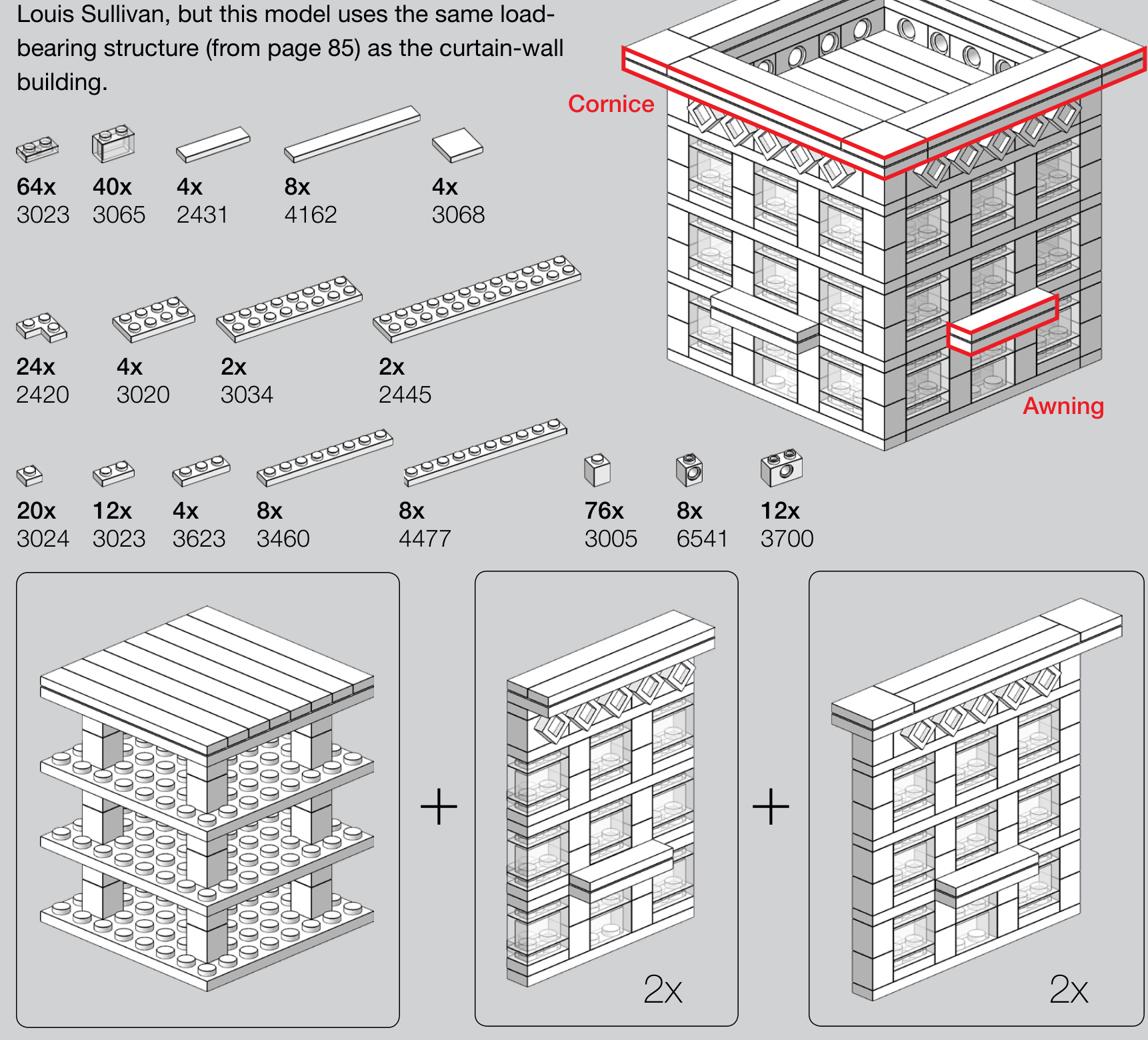
Load-bearing structure
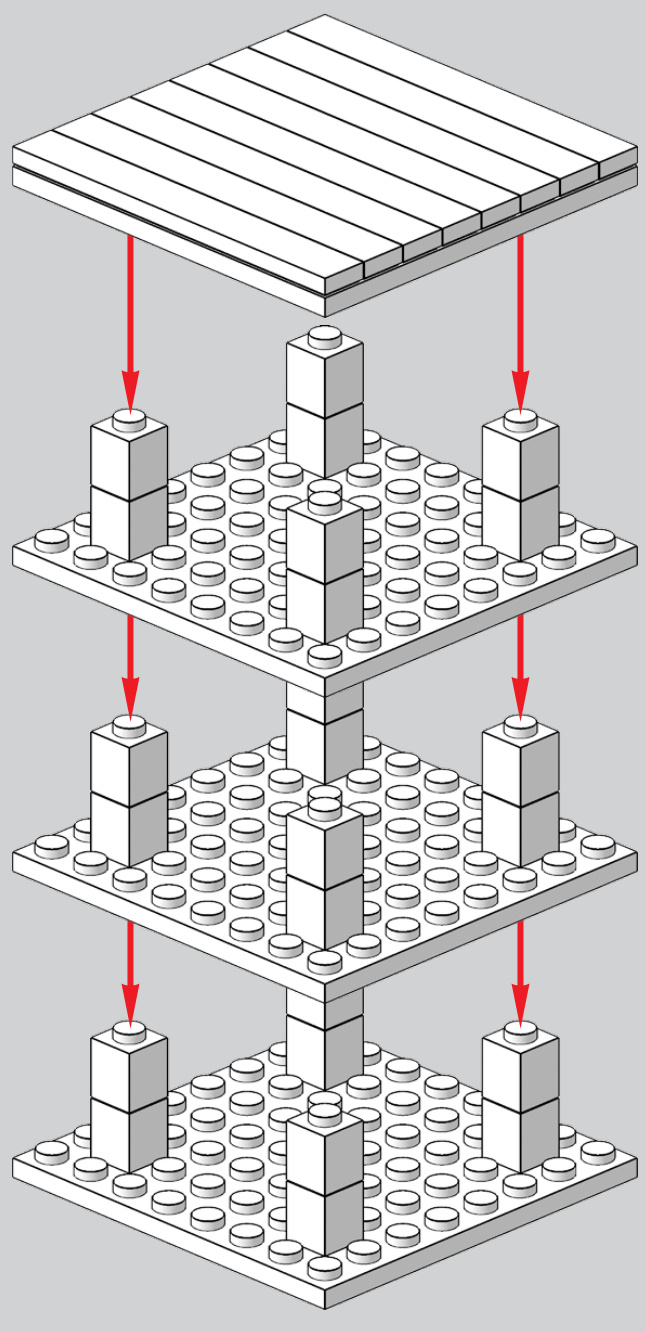
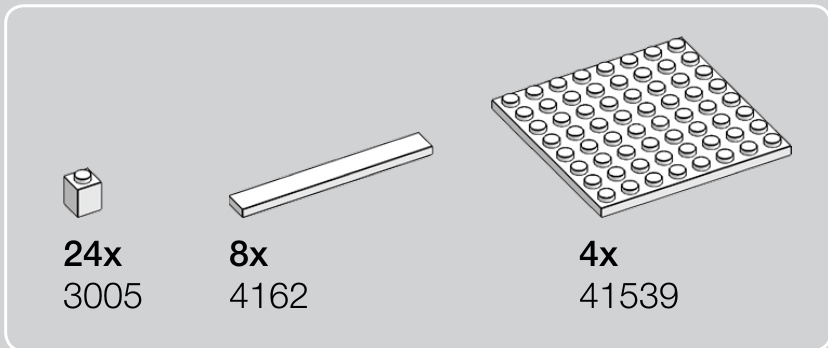
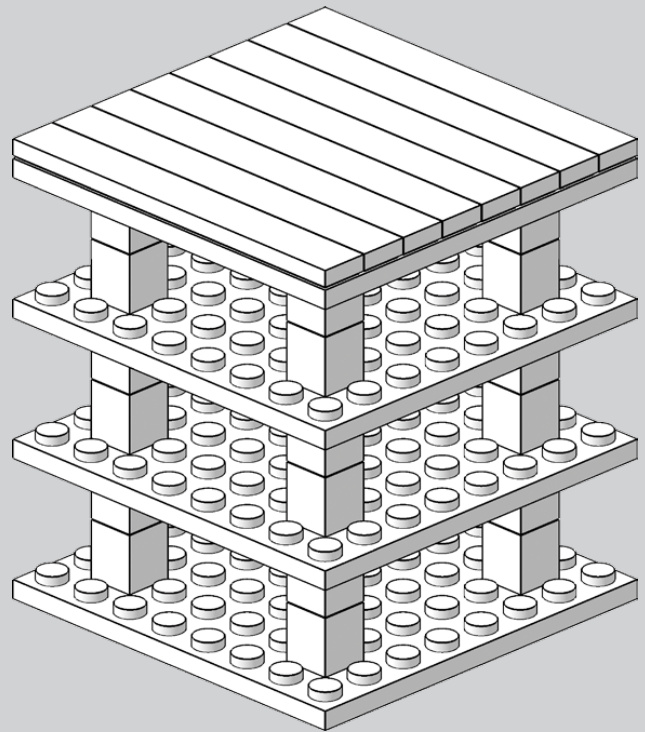
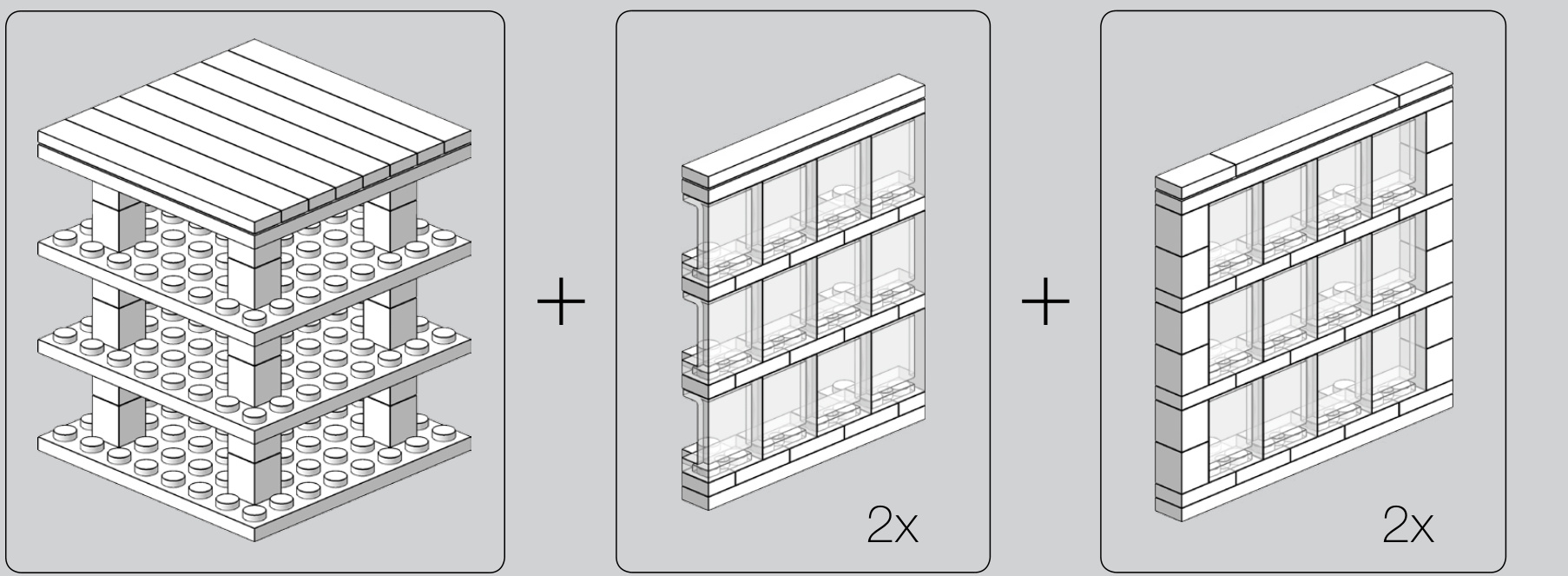
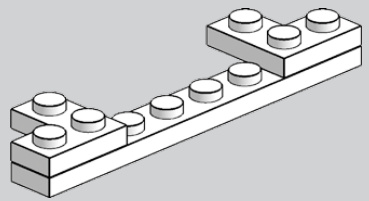
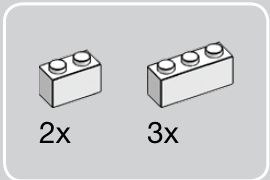
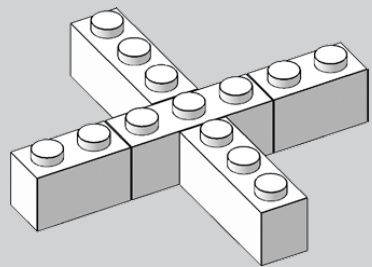
Most Modernist skyscrapers are built around a load-bearing structure, often built with steel and concrete. The building’s exterior looks solid, but in reality, it hangs from the central structure like a curtain. A glass and aluminum exterior is most common, but more-traditional materials like stone, brick, or wood are sometimes used. We’ll use this load-bearing structure as the base for the next two models.
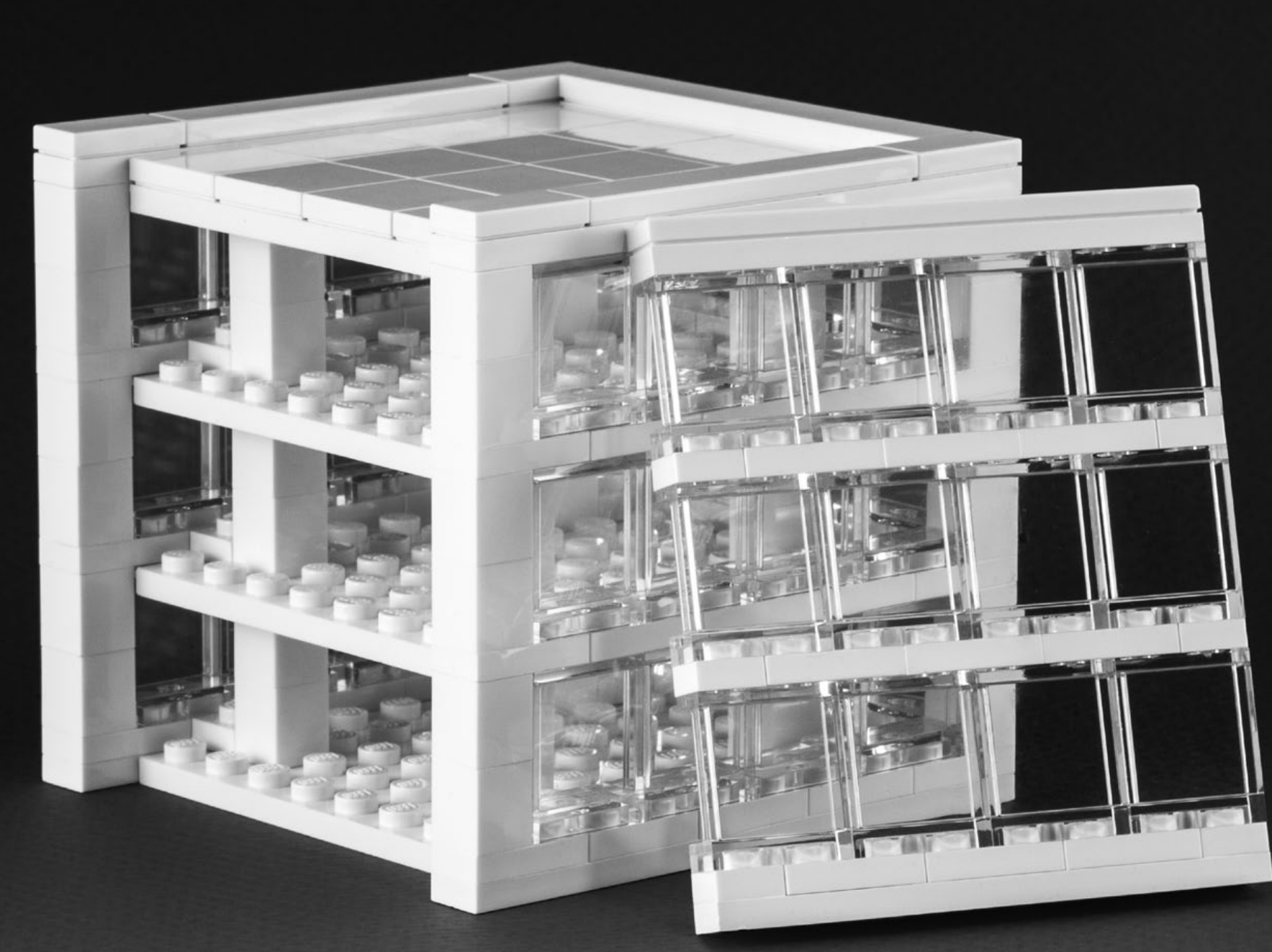
Curtain-wall Building
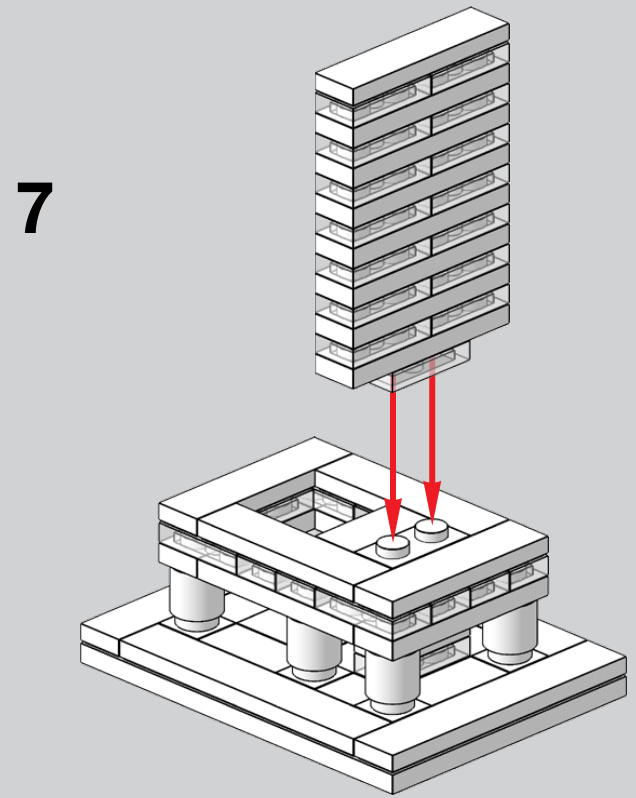
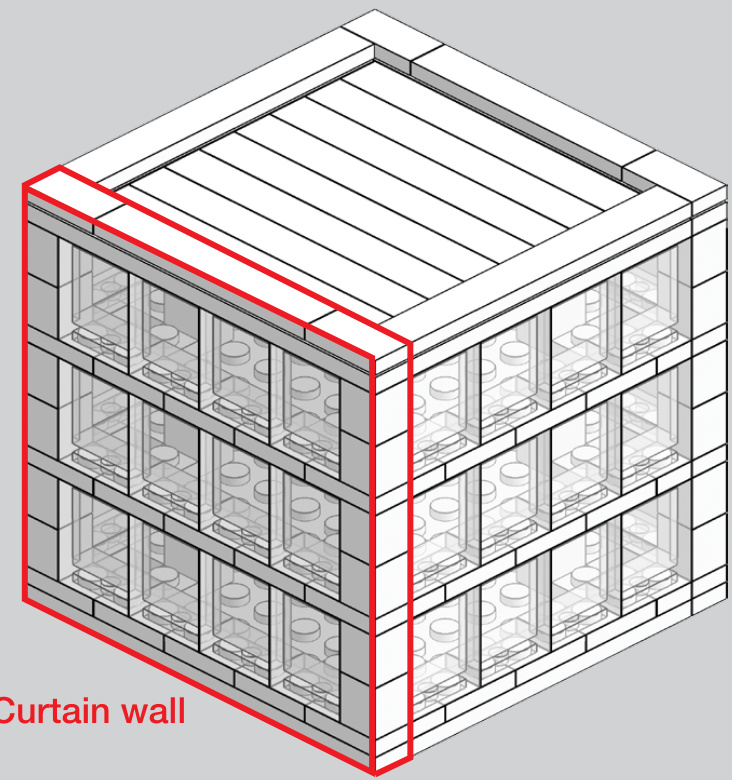
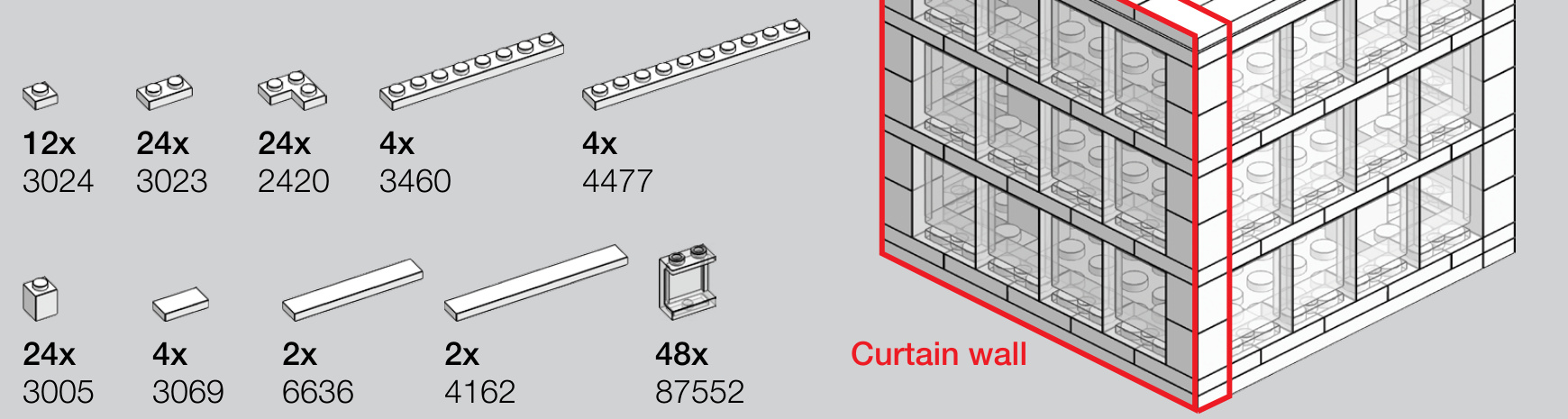
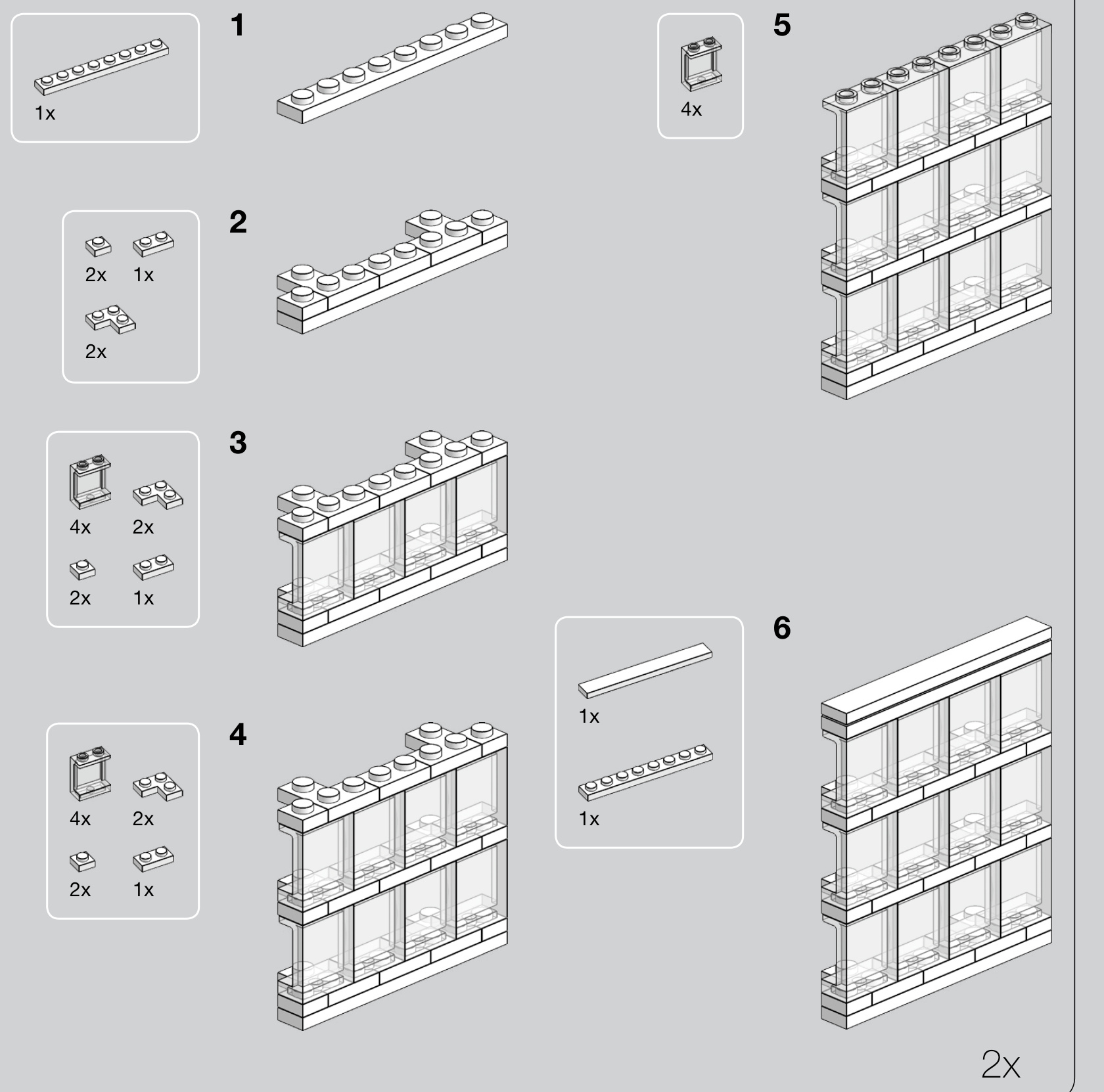
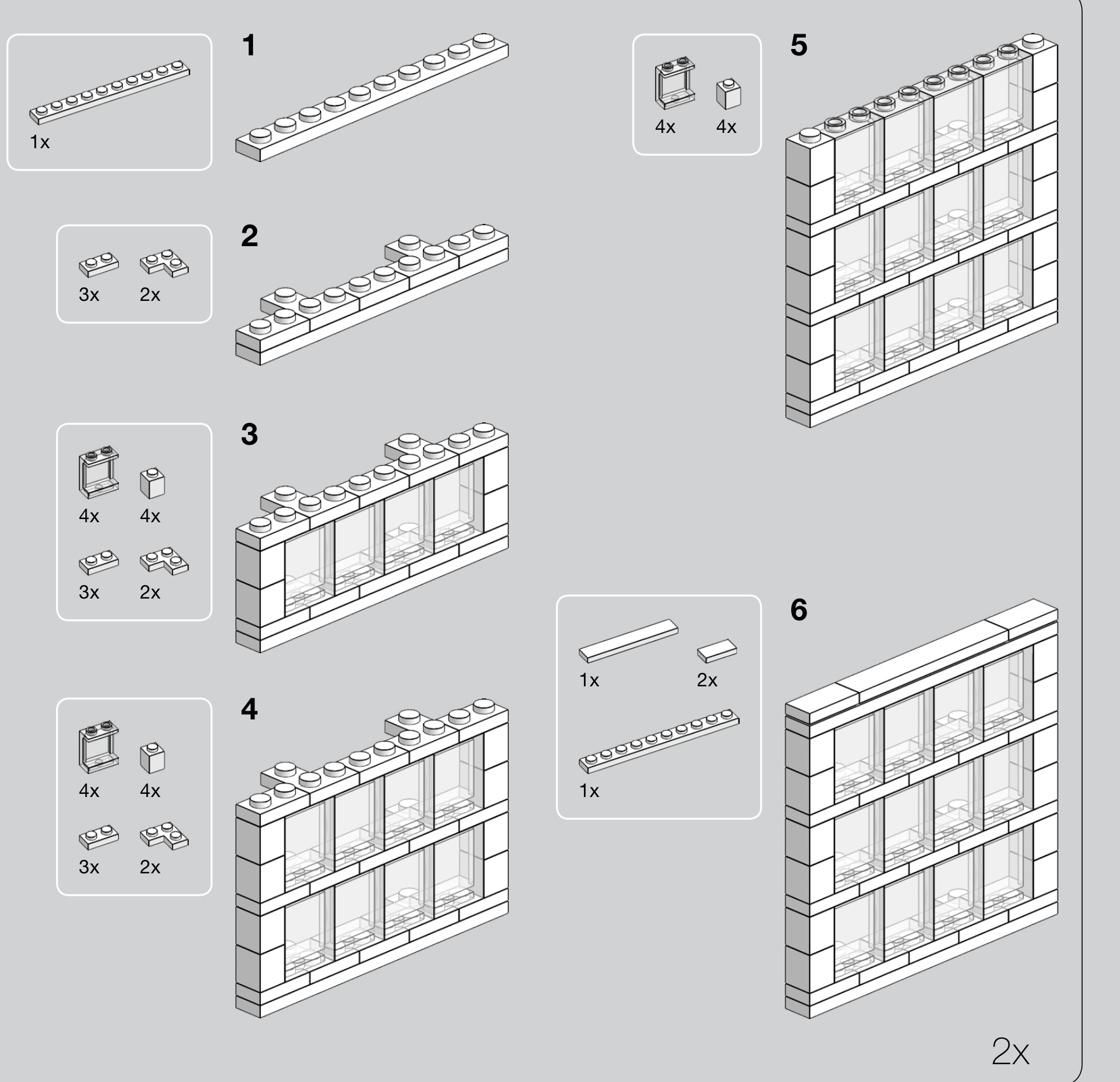
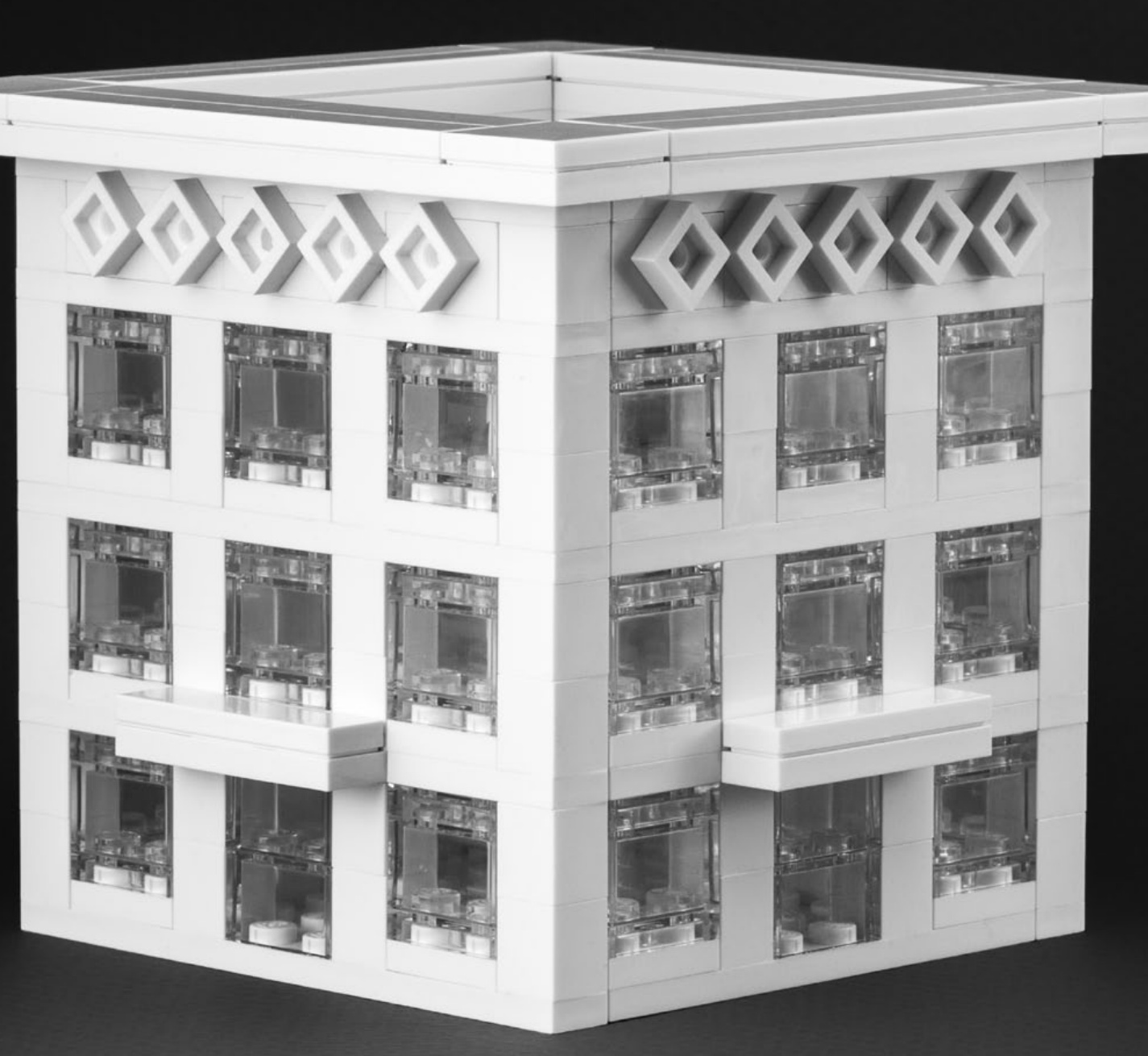
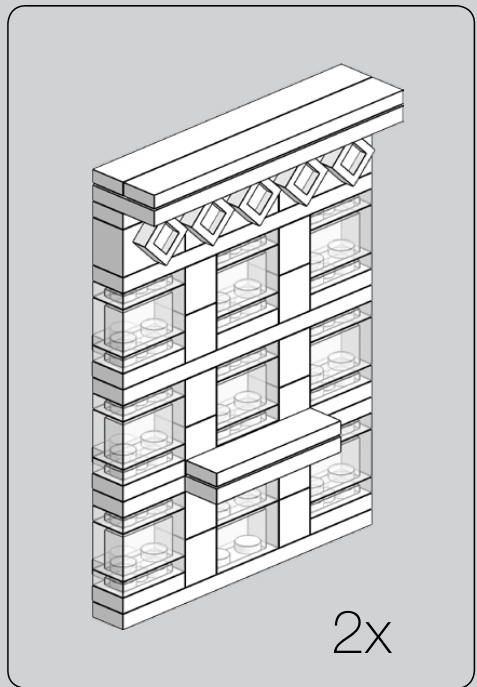
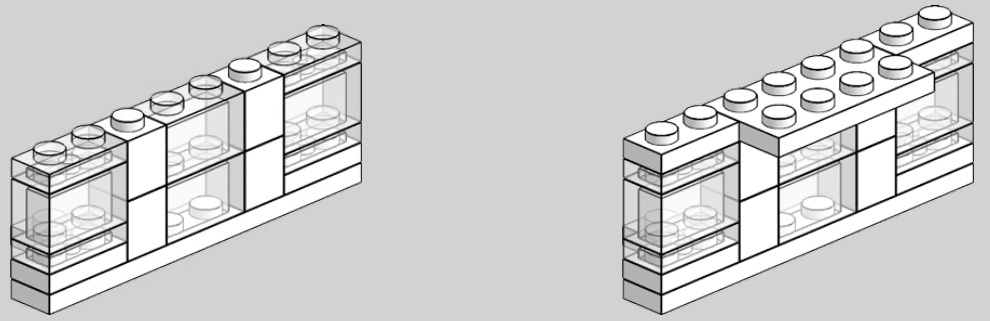
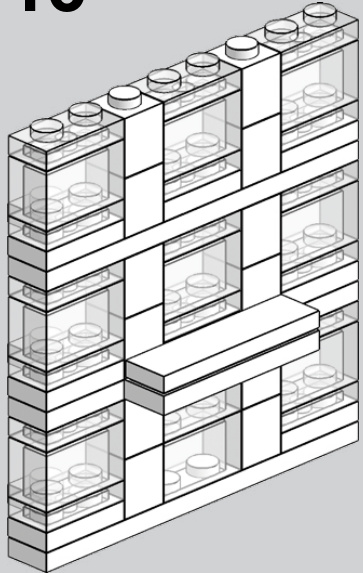
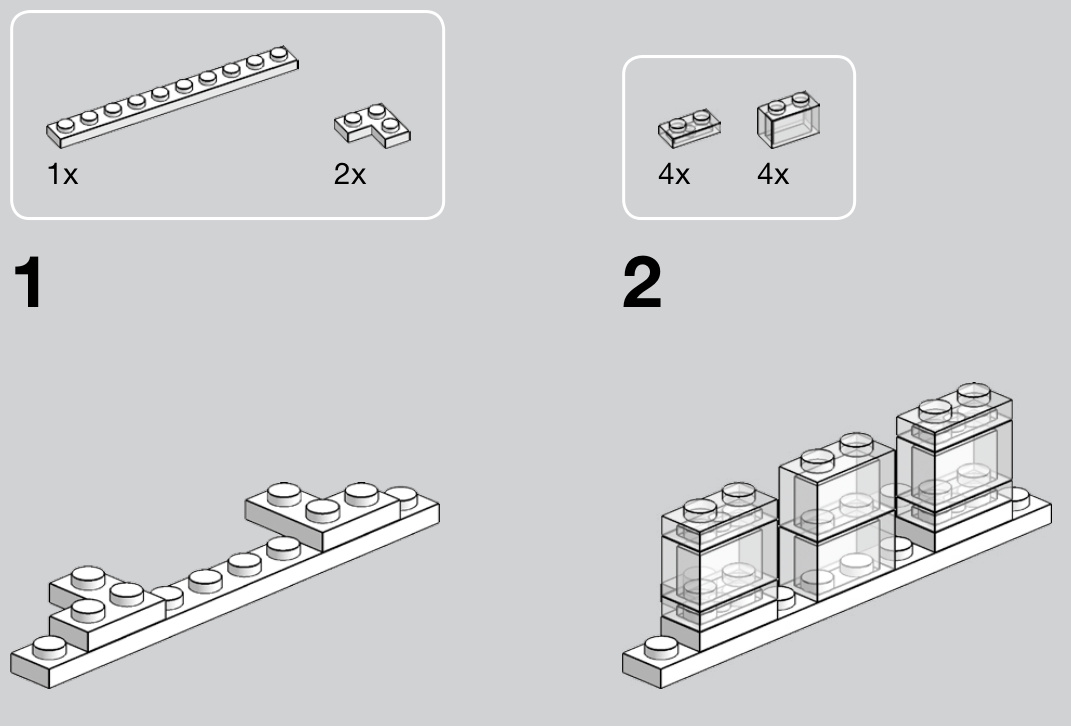
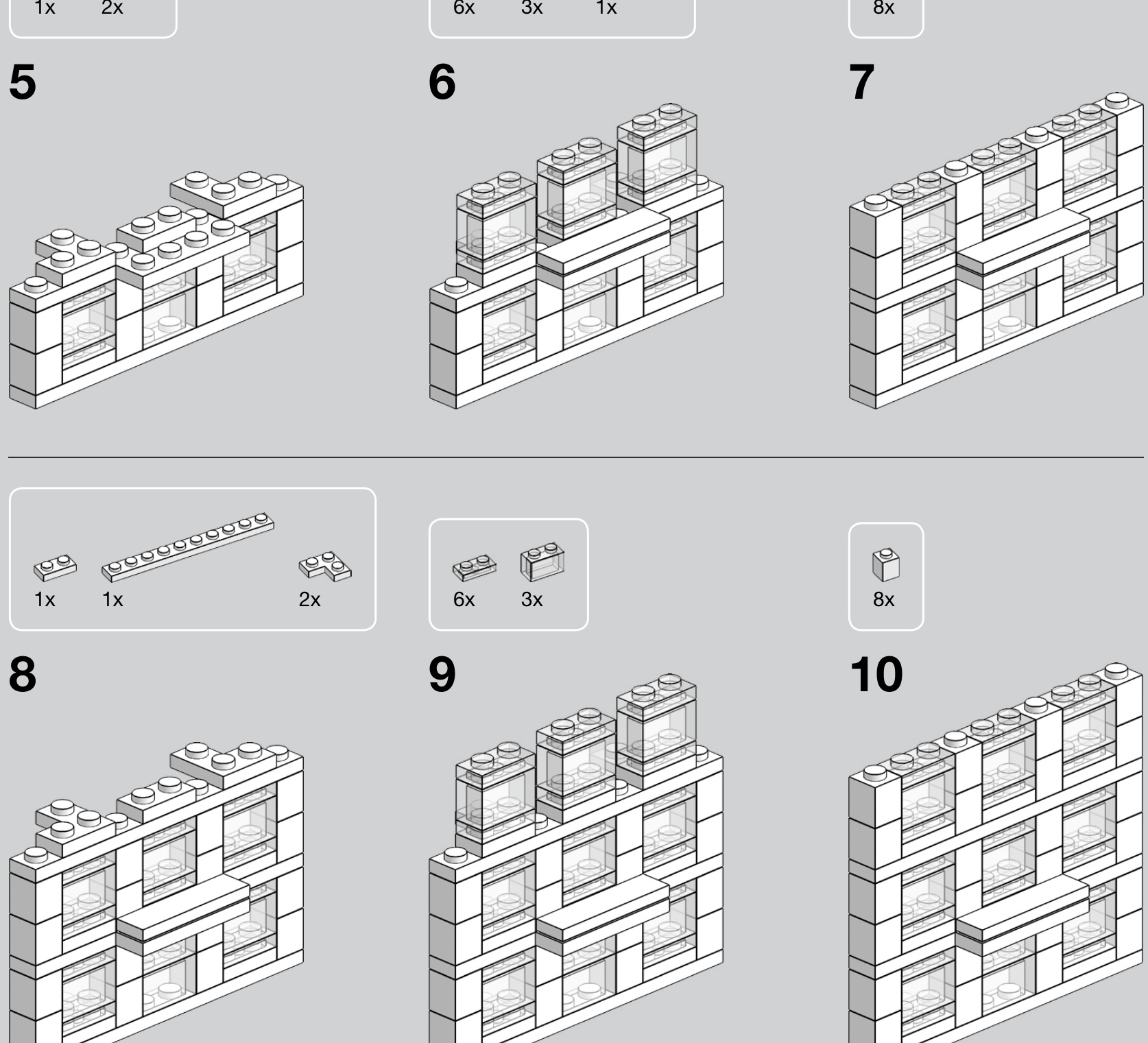
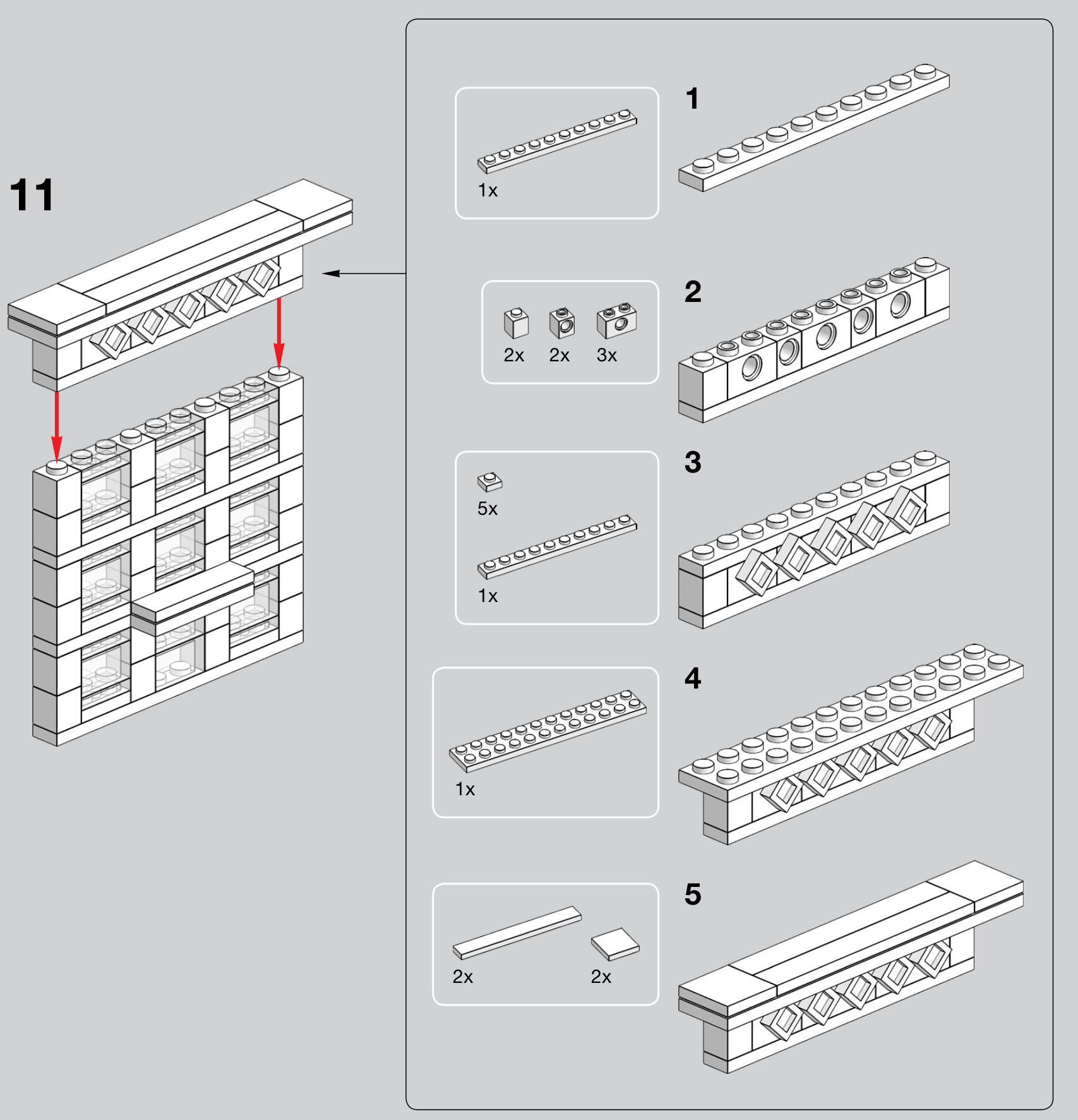
This is a simple Modernist curtain-wall exterior that you can hang from the basic load-bearing structure on page 85. You can modify this design to create a larger or smaller building.
Sullivanesque Building
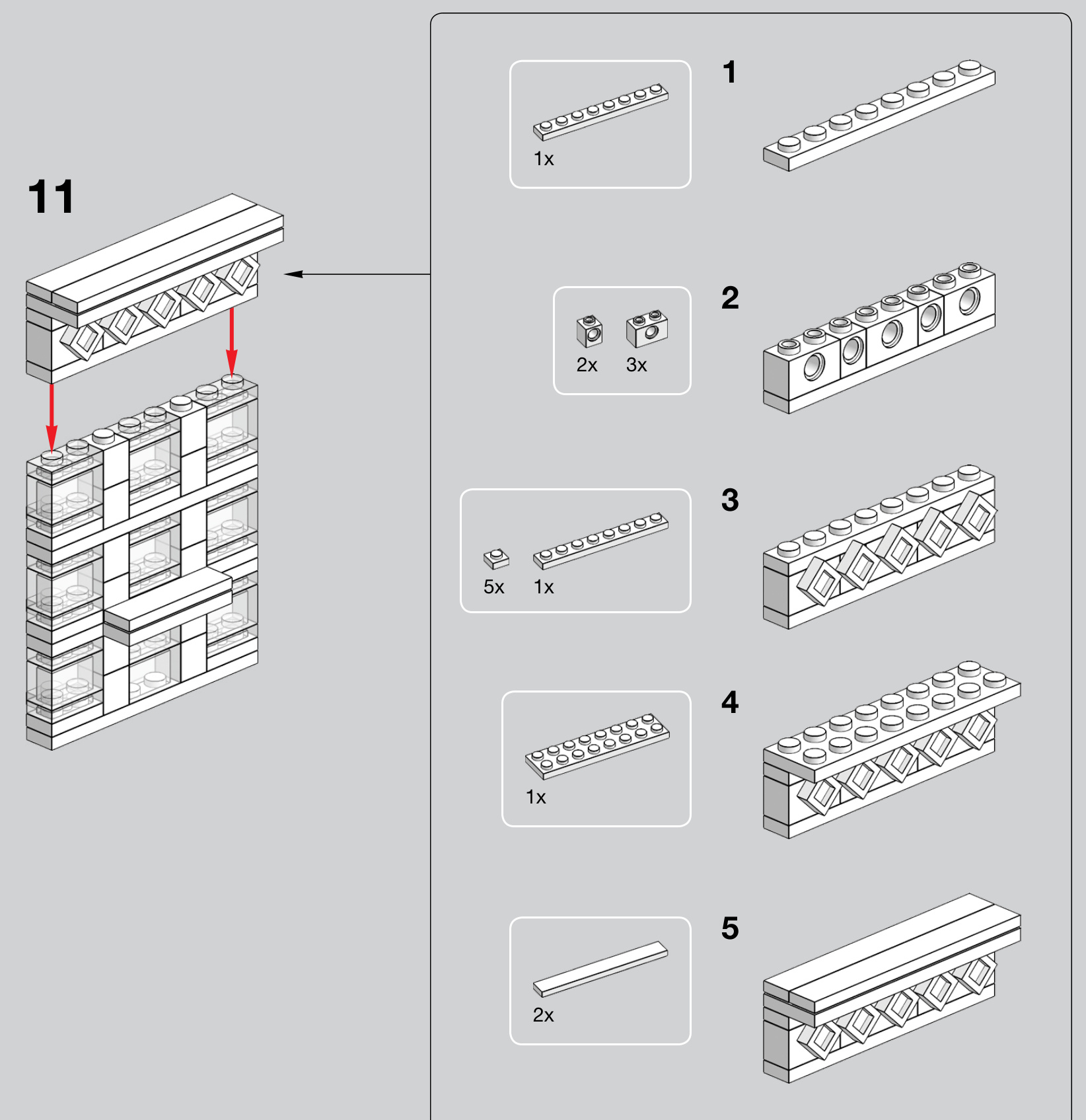
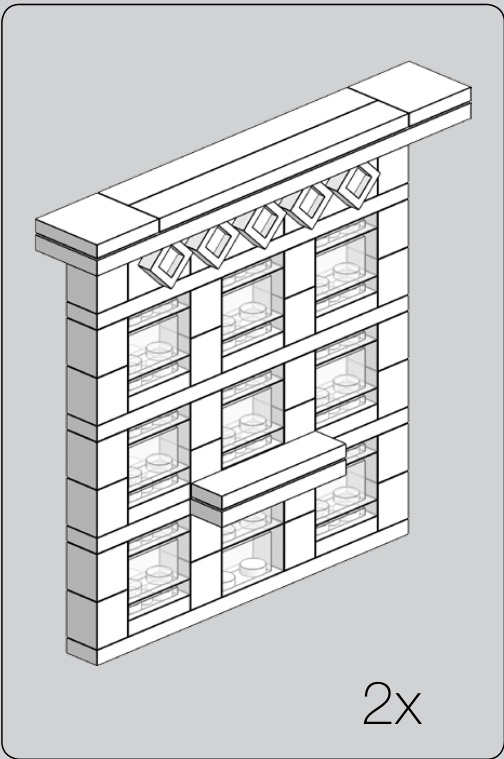
This exterior is in the style of early skyscrapers by
1
2
3
4
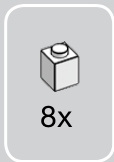
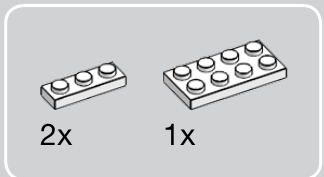
3
4
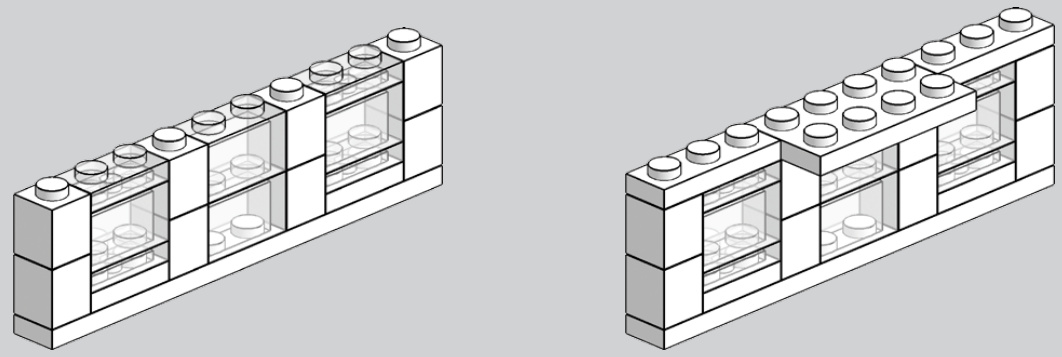
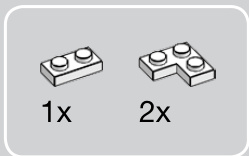
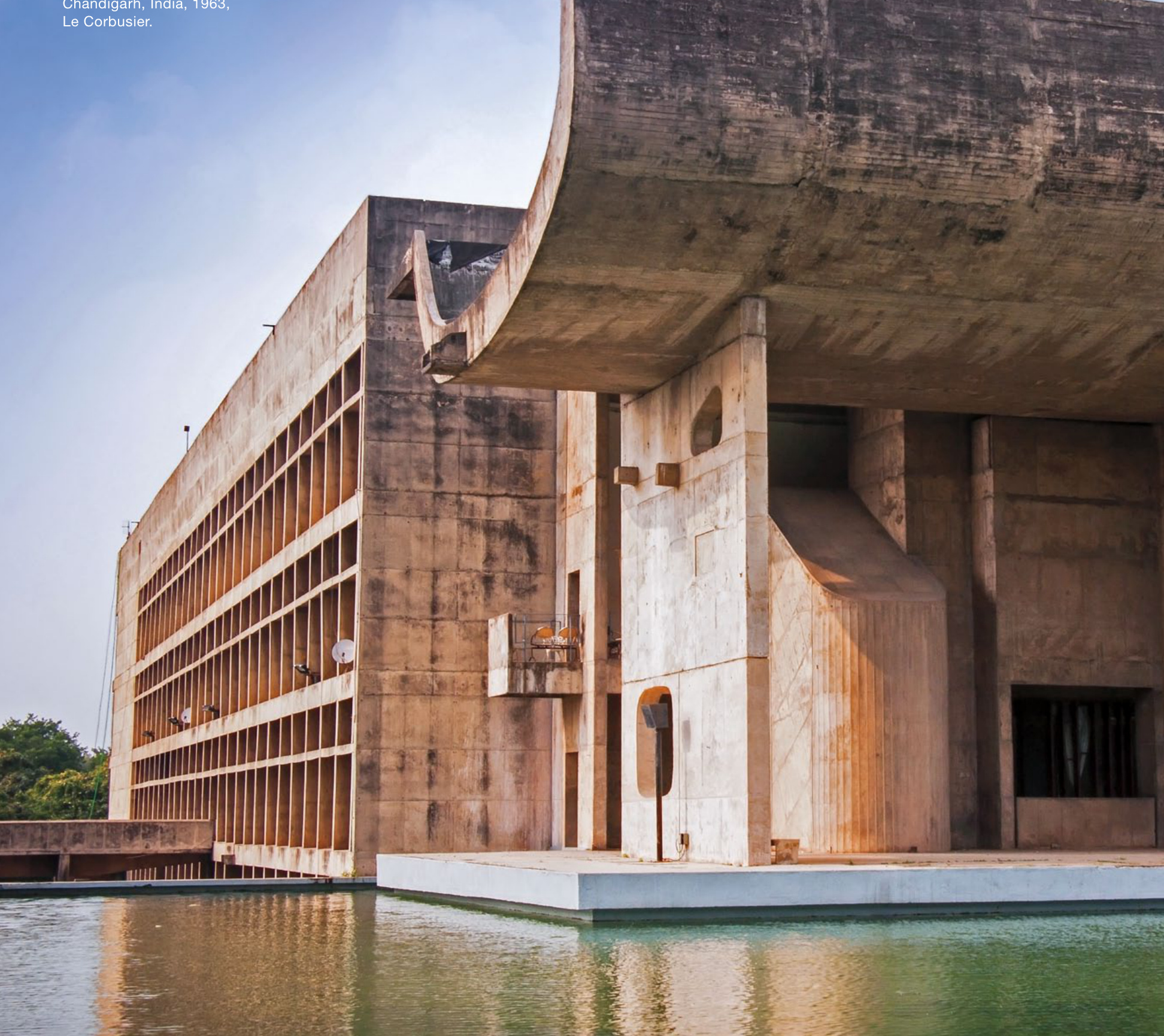

Brutalism
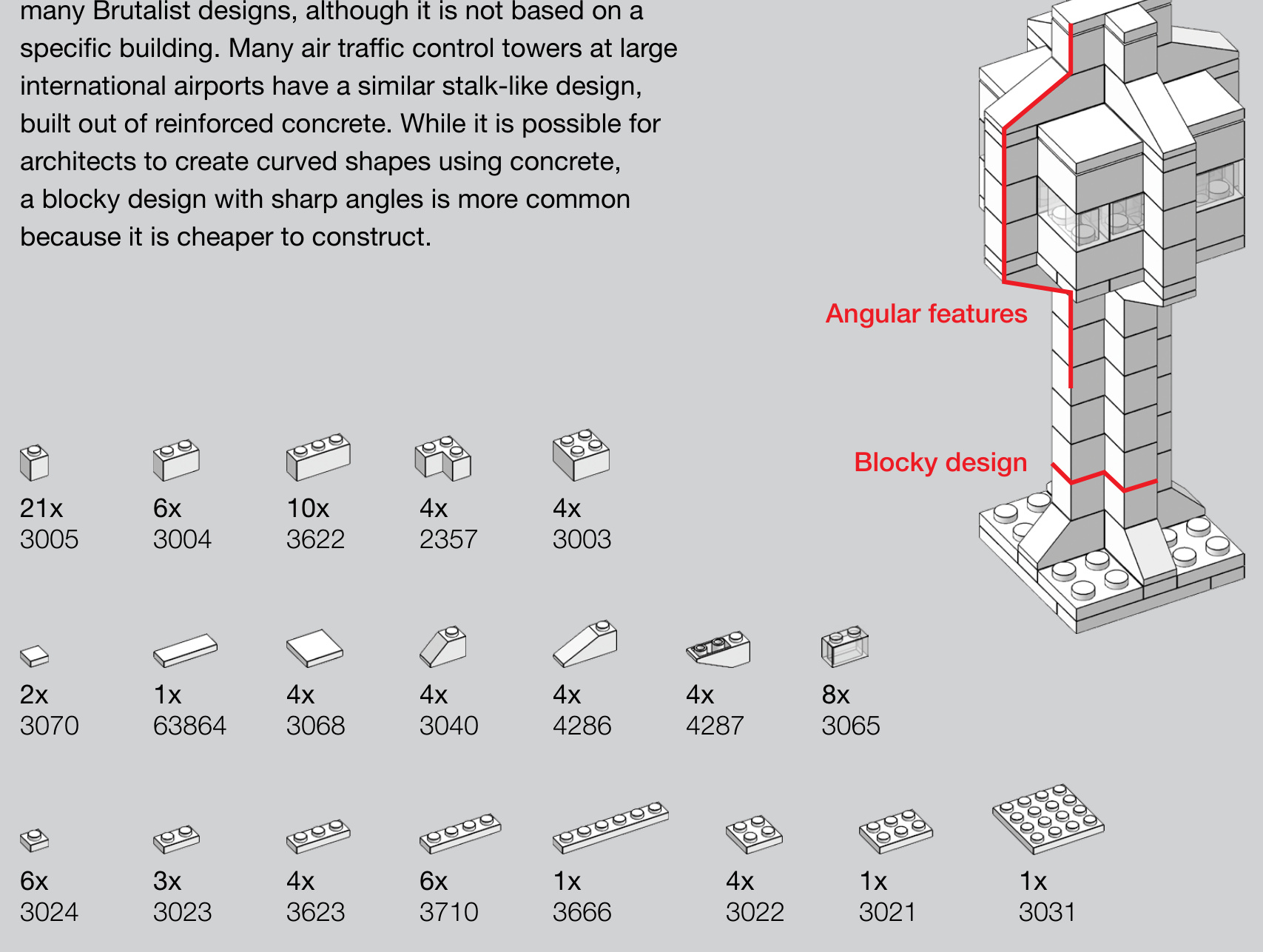
Brutalism is an offshoot of Modernism that exploits the creative potential of reinforced concrete. Because concrete is usually poured on site, architects are free to explore new and unfamiliar shapes, limited only by their ability to create a temporary form to support the concrete as it cures. Concrete is a low-cost building material, which has made Brutalism a popular style for cost-sensitive public projects such as universities, government buildings, and public housing.
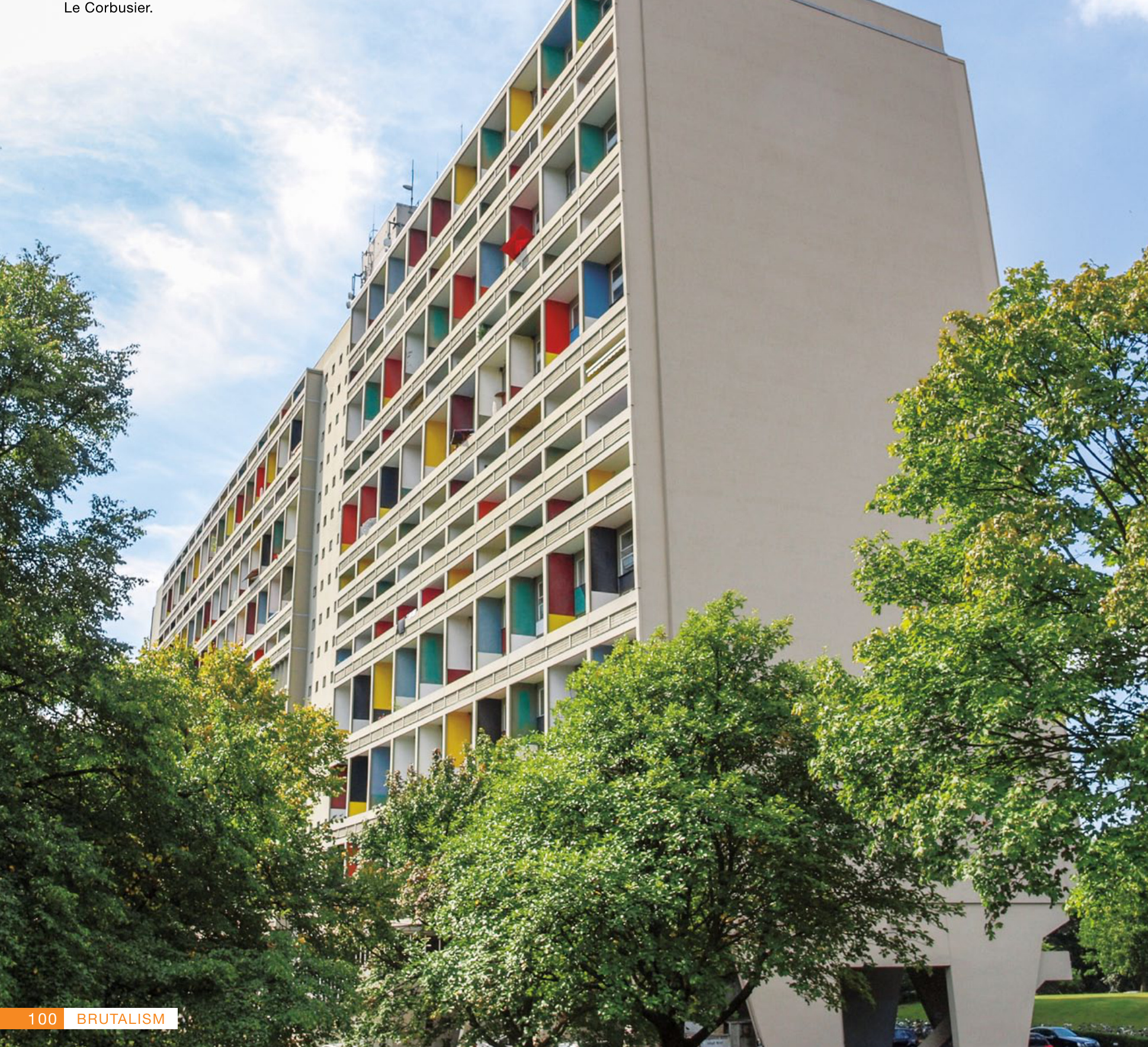
Many people assume that the name Brutalism comes from the architecture’s angular, aggressive, and raw look, which could easily be described as “brutal.” However, it is actually derived from the term béton brut (or “raw concrete”), which the architect Le Corbusier used in many of his buildings. Le Corbusier is probably most famous for Villa Savoye (1931), which is generally credited as a Modernist design, but his later Unité d’Habitation (1952) is a monument of concrete and a clear example of the early Brutalist style.
The versatility of raw concrete has allowed architects to create a wide variety of
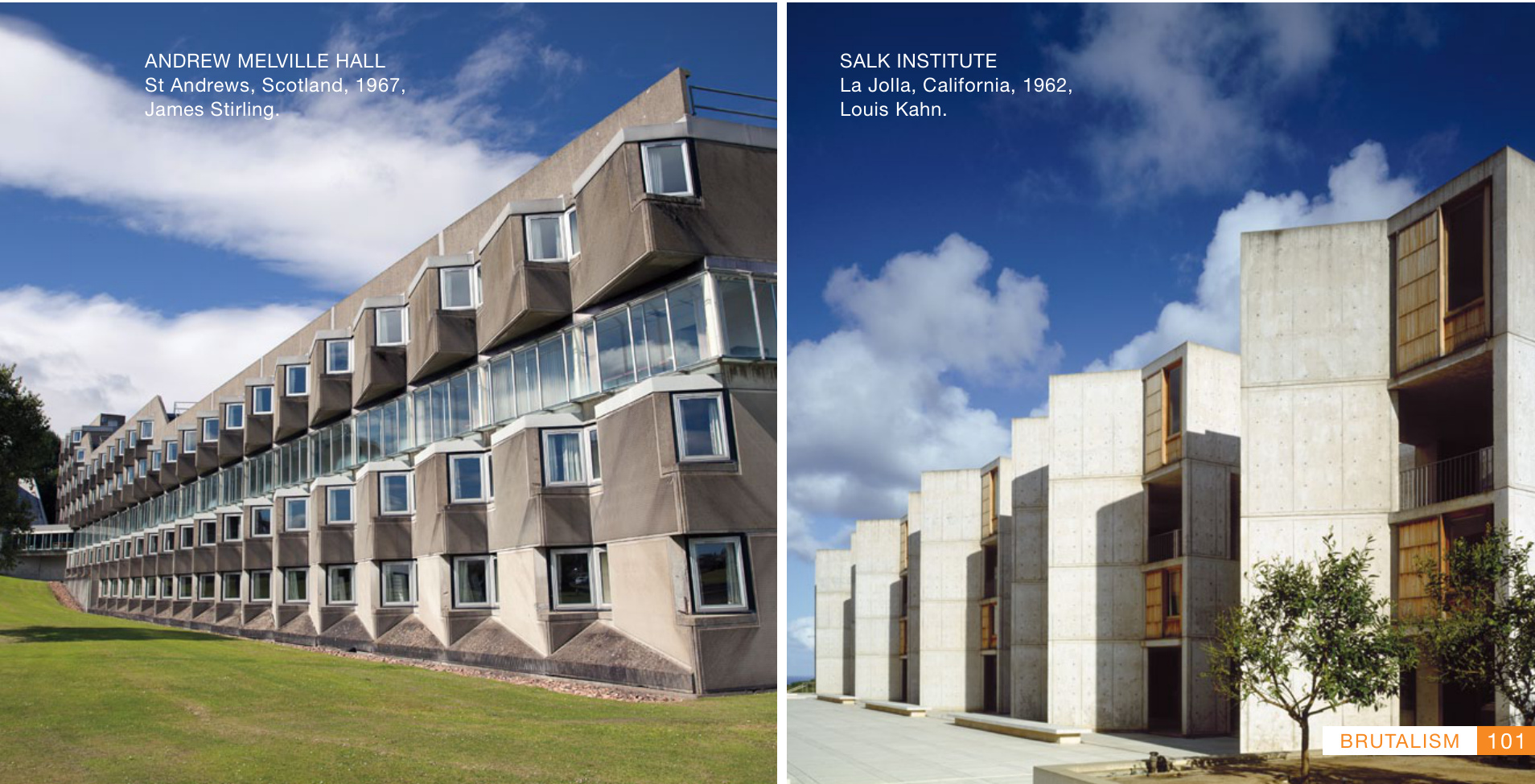
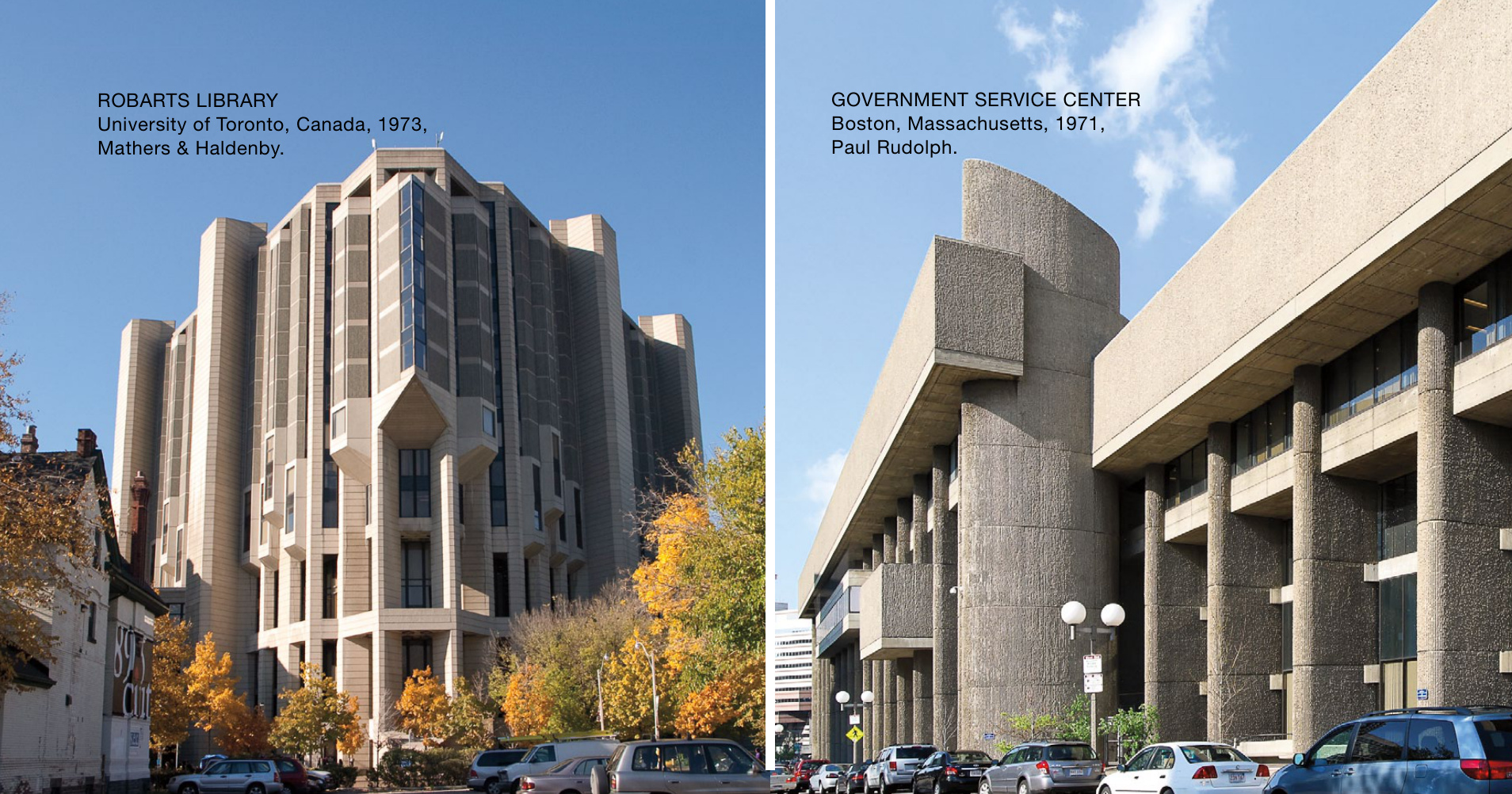
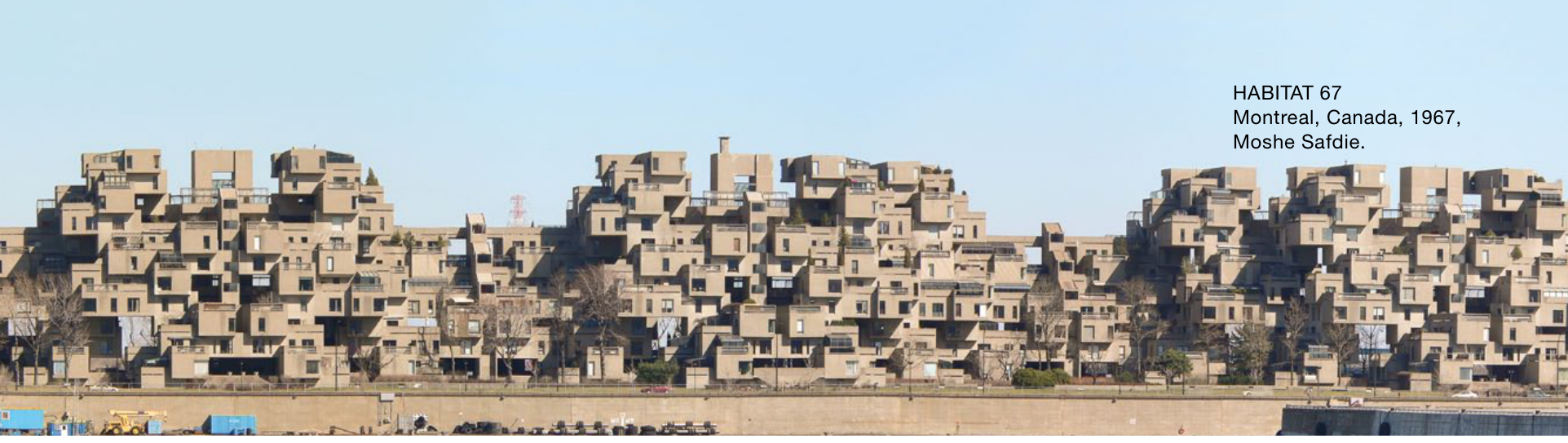
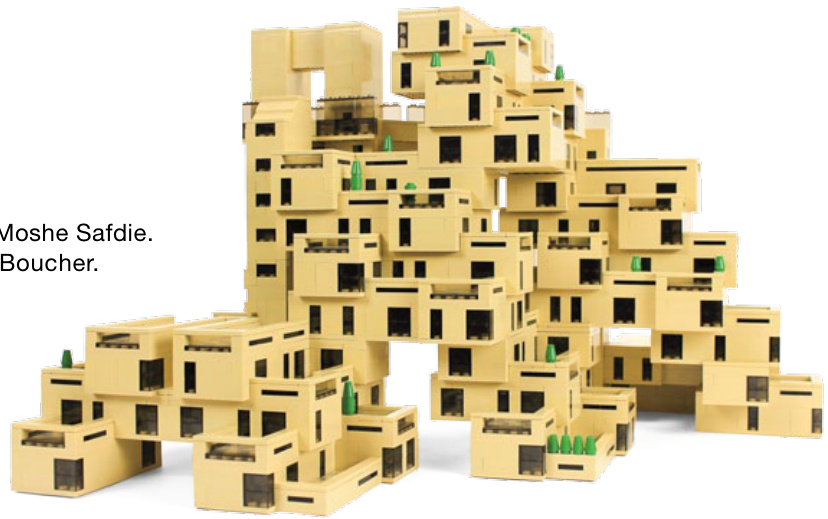
sculptural forms. Brutalist buildings can be sharply angular as in Andrew Melville Hall (1967), employ blocky cubic forms like Habitat 67 (1967), feature smooth curves, or combine all of the above, such as with Palace of Assembly (1963) in Chandigarh, India. Many buildings follow strict symmetry, while others have more unpredictable forms. Small, oddly shaped windows are common—a frequent criticism of the style by the people who live and work in these buildings.
Although Brutalism was a leading style throughout the late 1960s and early 1970s, a subsequent period of strongly negative
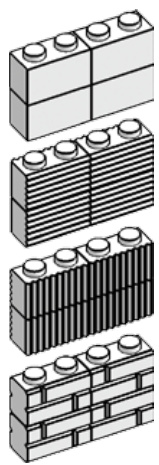
LEGO Concrete Textures
The grooves in these bricks mimic the textures left behind when concrete forms are removed.
Smooth
Vertical grooves
Brick texture
LEGO Bricks

Regular bricks can create large blocky forms quickly.

attitudes led to the destruction of many Brutalist buildings. The negativity is understandable: many Brutalist buildings were cheaply made to meet the immediate needs of growing cities for subsidized housing and other services.
Slopes add interesting angles to your model.
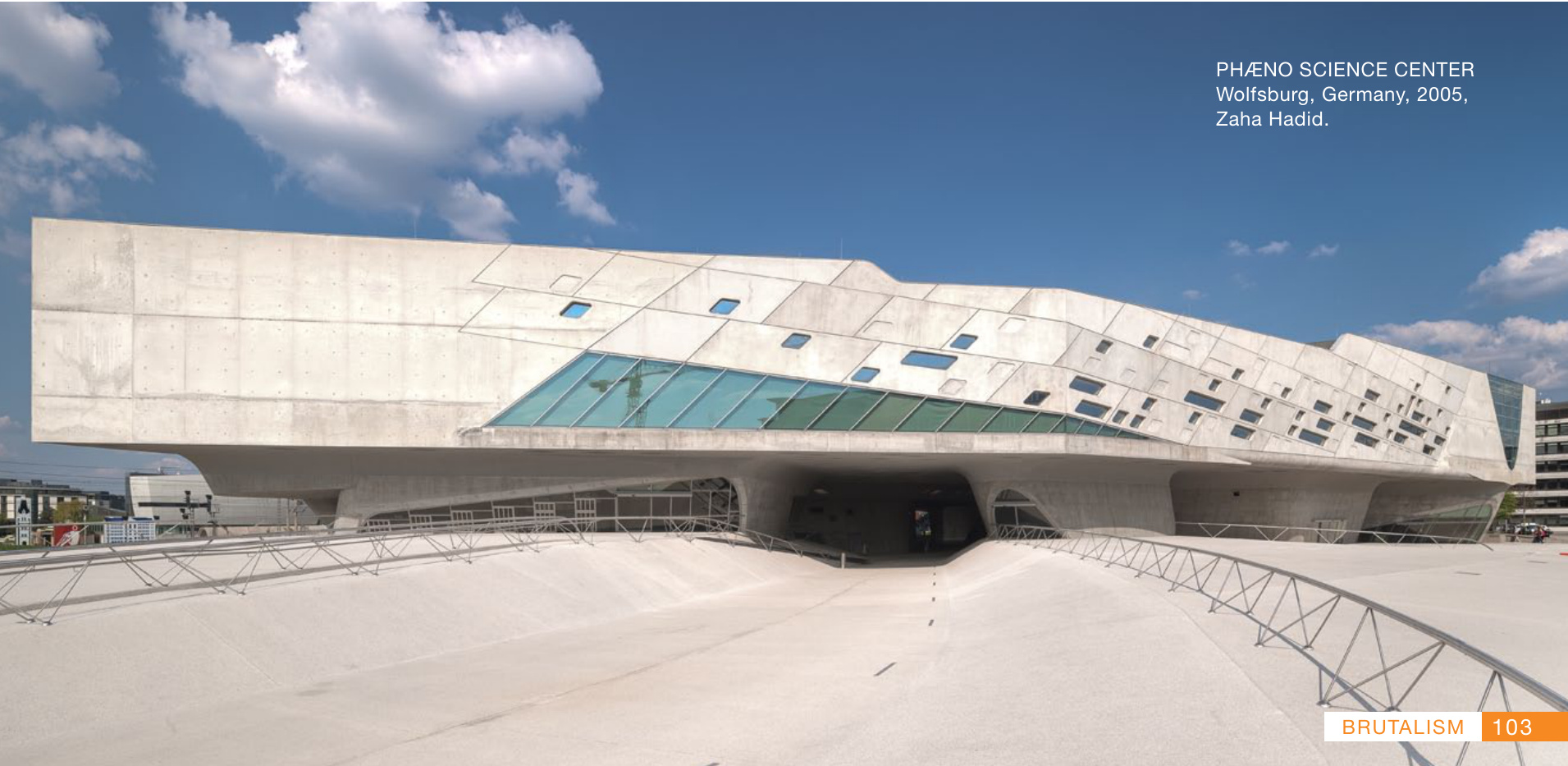
capabilities of concrete and the ability to create structures on a massive scale, rather than on mere cost savings. This is evident in the Phæno Science Center (2005), which blends Brutalist construction techniques with an abstract, Deconstructivist form.

Inverted slopes let your building get wider as it gets taller.

Round bricks can create contrast with sharp angles.
Fortunately, a new generation of architects and architecture enthusiasts is pushing past these preconceived notions. Many of the finest Brutalist buildings that remain standing have been protected as landmarks, and a Neobrutalist style has emerged in recent years. These new designs tend to focus on the sculptural
Brutalism in LEGO
Many Brutalist buildings have rectangular forms that are easy to re-create using LEGO bricks. Architect Moshe Safdie even used LEGO bricks to help design Habitat 67, as he explained in a 2014 interview: “I bought all the LEGO in Montreal at the time because we built many alternatives. The brick was perfect for the cluster studies.”
A growing selection of LEGO bricks makes it possible to create a model with angles and curves, but you may find it difficult to re-create a specific building because of limited shapes. If you want to build Brutalist buildings with complex forms, you may prefer to create buildings of your own design. For inspiration, try combining curved and angled bricks in many different ways.
LEGO Colors
White
Light bluish grey
Dark bluish grey
Tan
Trans clear
Brutalist LEGO Models
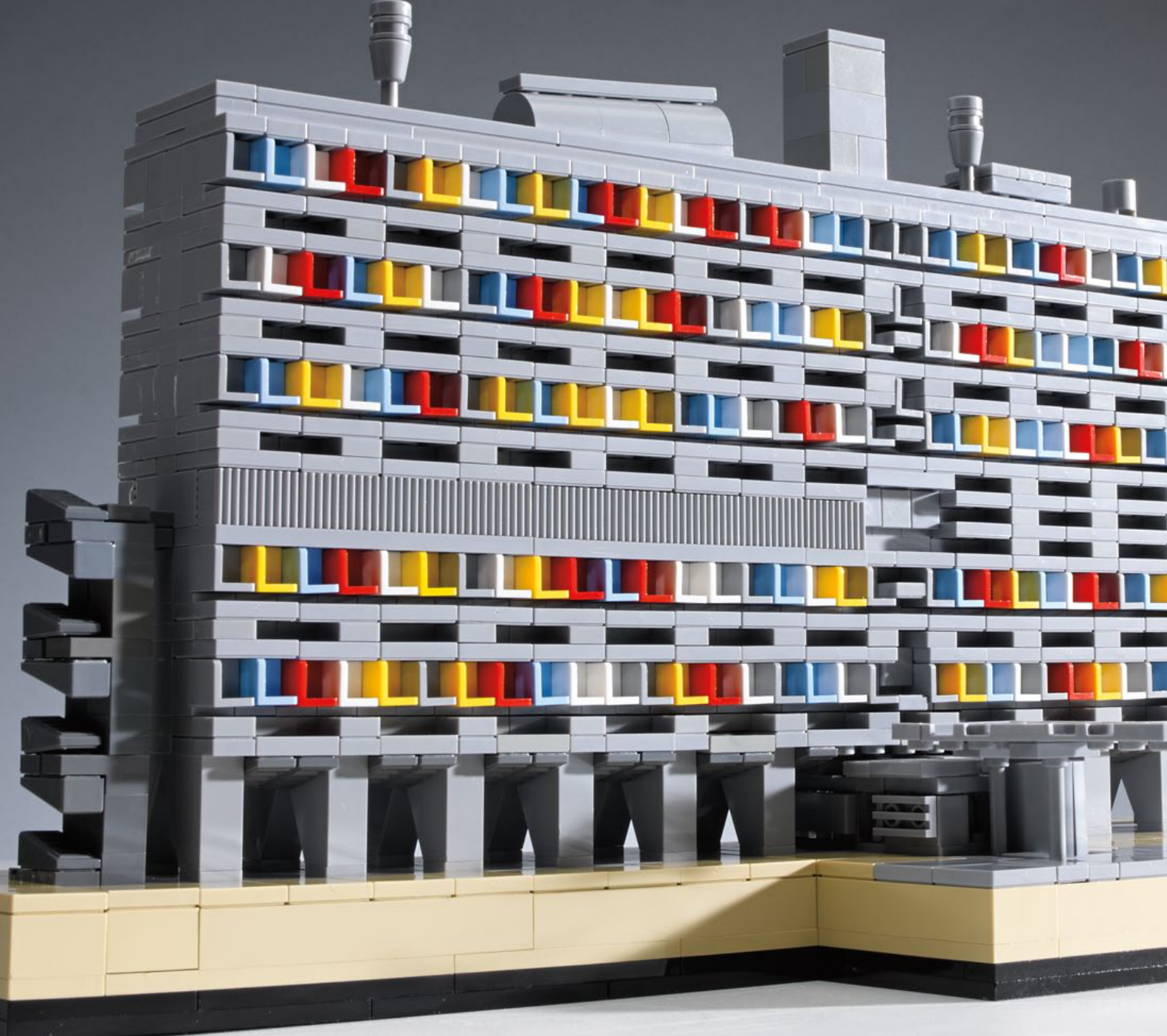
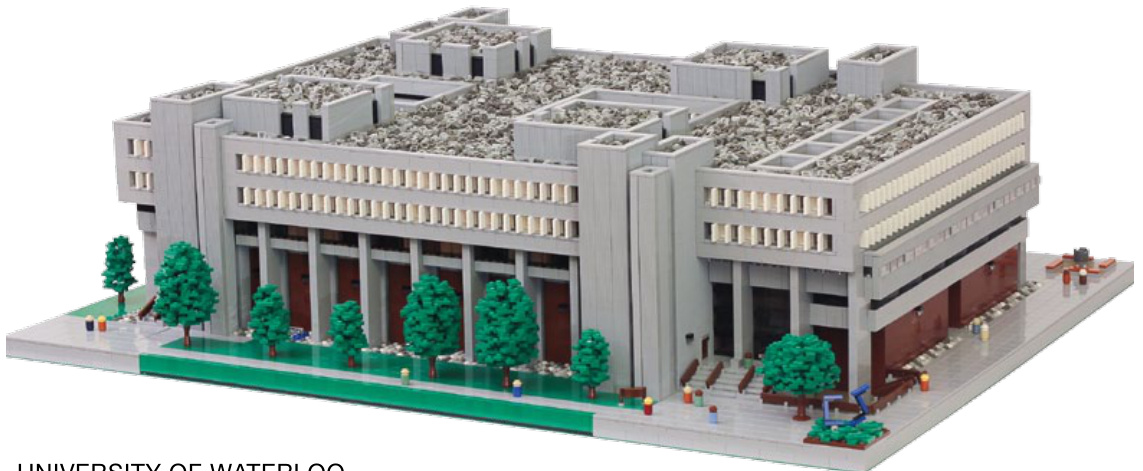
University of Waterloo, Mathematics & Computer BUILDING Waterloo, Canada, 1968. LEGO model by Jason Allemann.

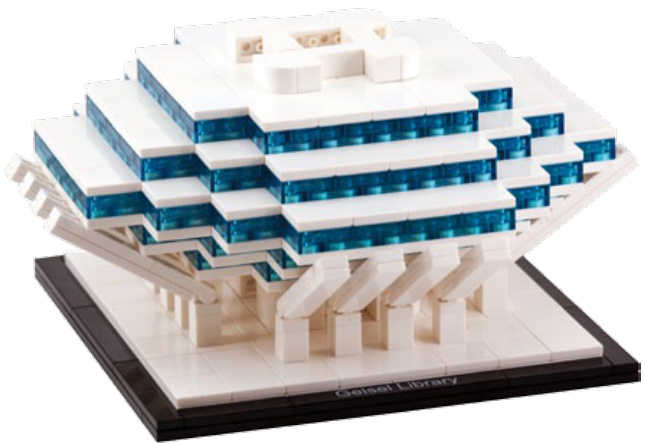
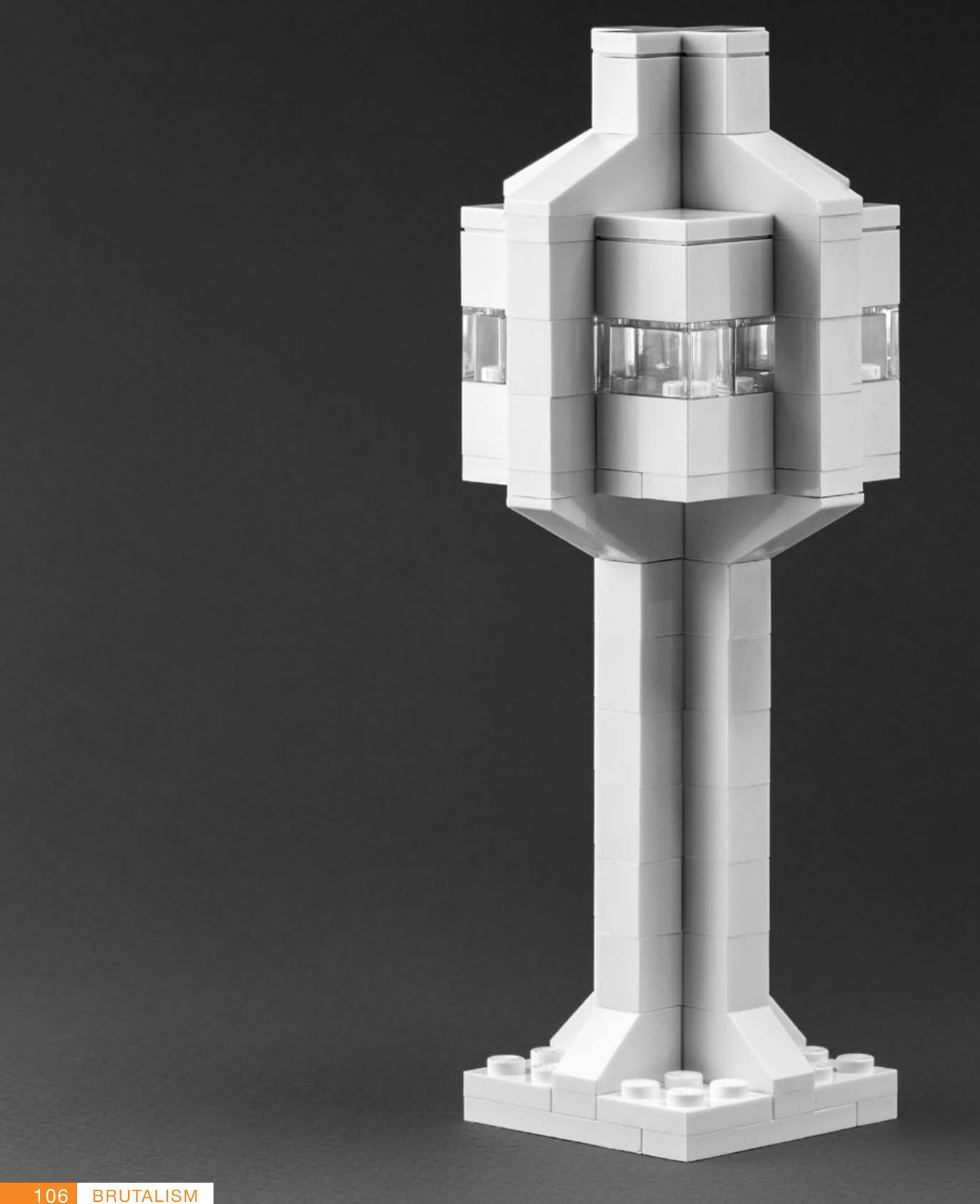
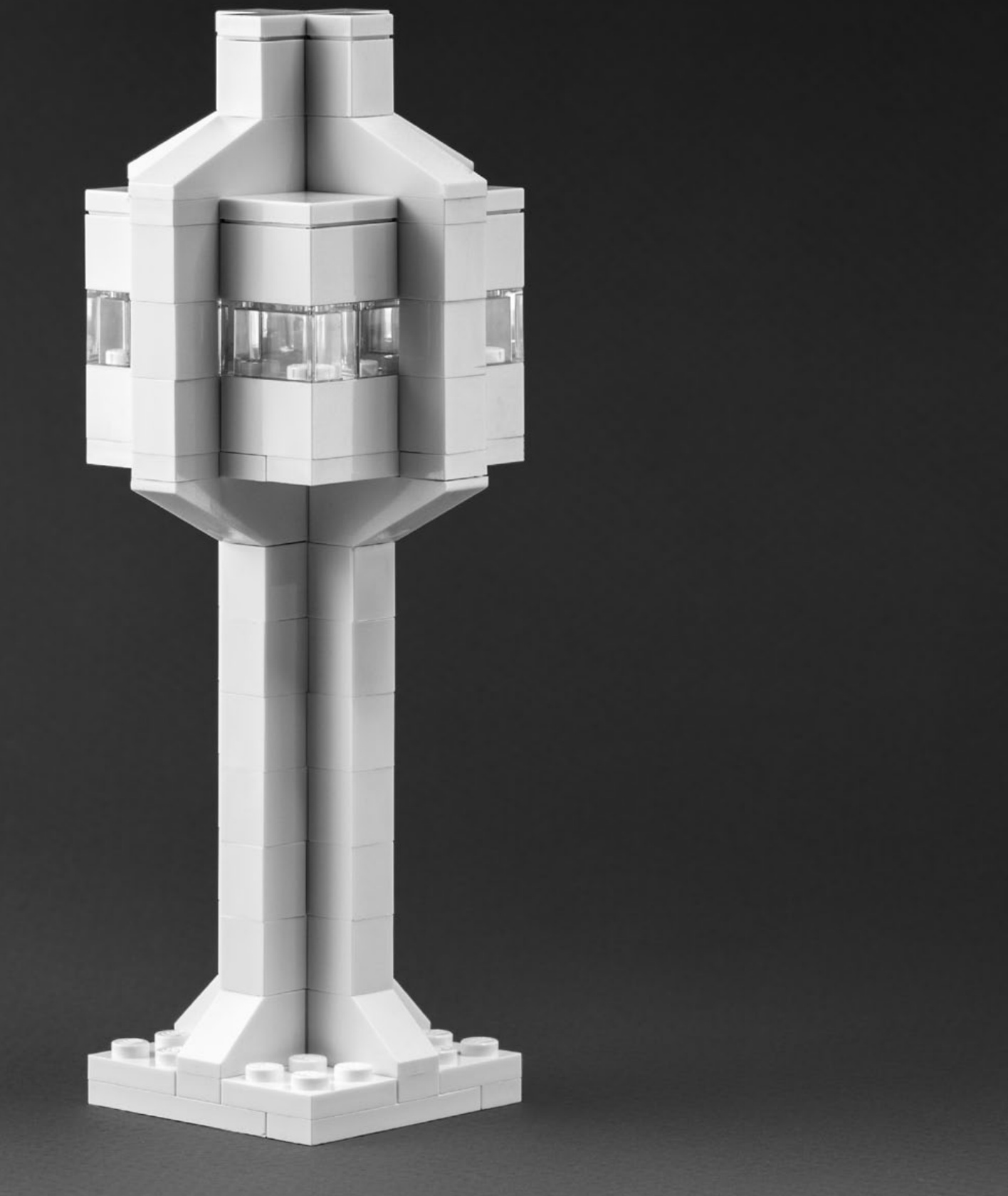
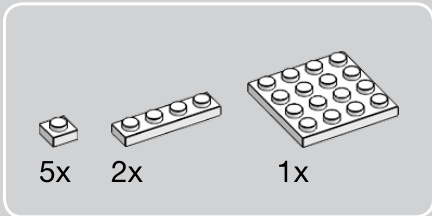
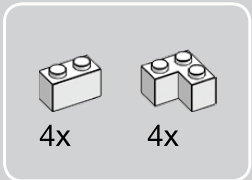
Air Traffic Control Tower
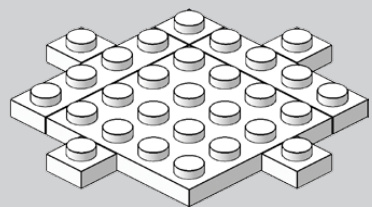
1
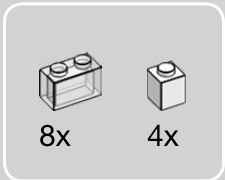
2
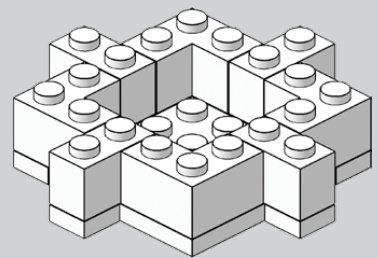
3
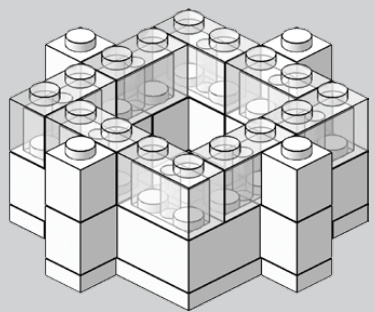
4
5
6
Transferring torque with LEGO pieces is possible not only with gears and axles but also with two additional systems: pulleys and chains. All of these systems work with similar principles.
LEGO pulleys are wheels that can be connected via strings or rubber bands, allowing for the transfer of drive and movement. You’ve seen similar pulleys in “belt” systems in real life. Pins without friction, bushes, and other circular elements can also be used as LEGO pulleys. A pulley system is particularly useful for lighter loads, transferring drive silently and over a long distance.
LEGO chains work similarly, though they’re better suited for higher torque than a pulley. A chain replaces the rubber band of a pulley system, and gears replace the pulleys. The driver gear in a chain is known as a sprocket, just as in a tracked vehicle. Instead of being held by the frictional force of a string or rubber band, a chain is held by meshing its links with gears. Figure 6-1 shows the pulley and chain systems side by side.
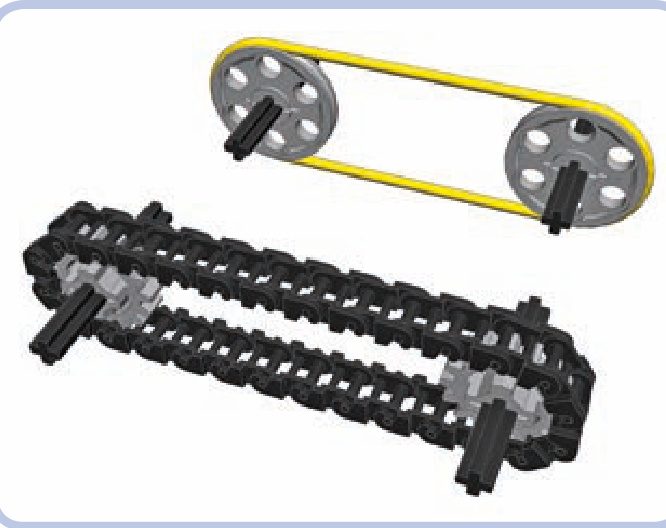 Figure 6-1: Two pulleys with a rubber band (yellow) and two gears with a chain (black). The two systems share the same working principles.
Since the chain system is less versatile and therefore simpler, we are going to discuss it first. Then we will move to pulley systems and configuration. Keep in mind that the same configurations are possible for chain and pulley systems, though they’re often more practical with pulleys.
chains
图片总数:94 张